Rodent Removal in Tucker, GA
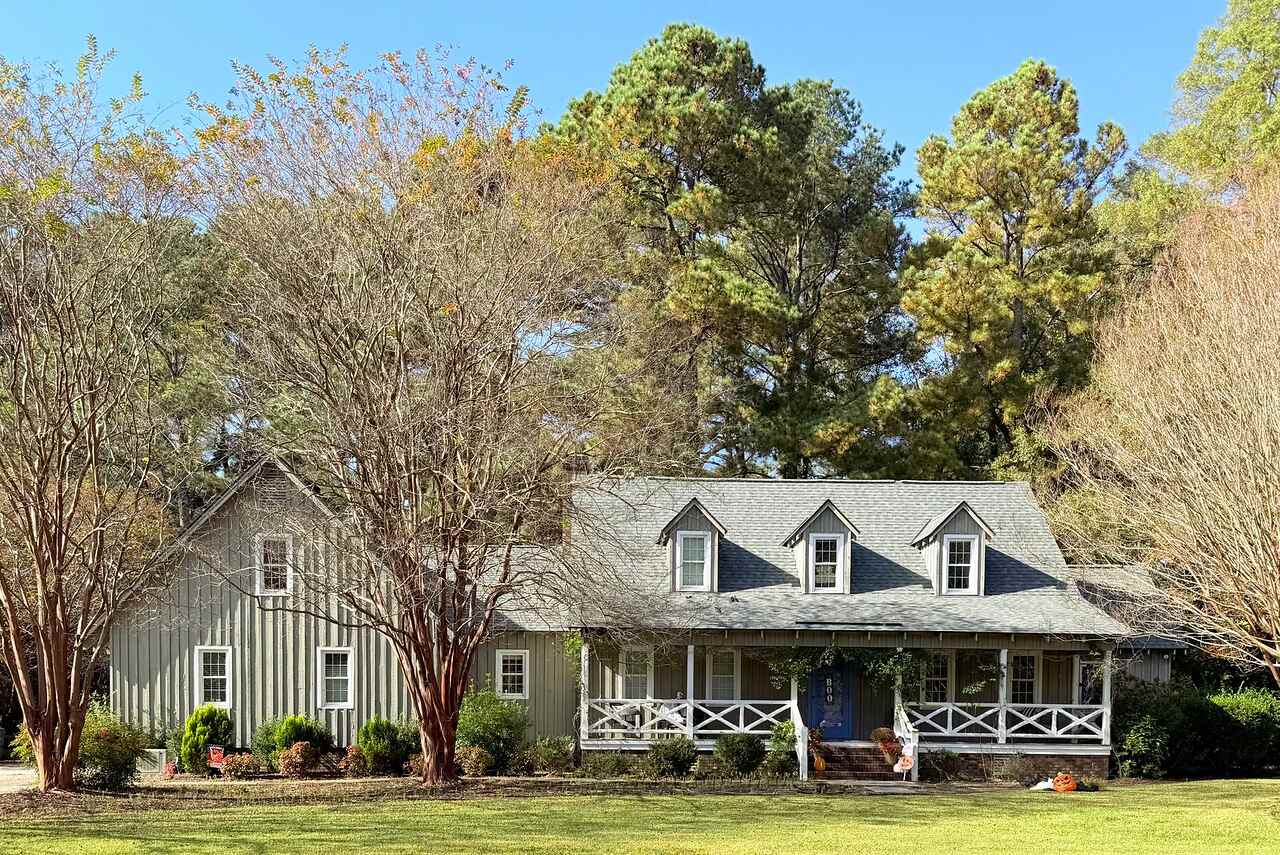
Tucker is largely mid-century ranch housing on crawl spaces, under pines and hardwoods that have had sixty years to grow. Both levels of the house are in scope on almost every visit here.
- 1950s to 1970s ranches
- Crawl spaces and low rooflines
- Pines and hardwoods overhead
Free Inspection in Tucker
The free inspection covers the roofline from a ladder, the attic, the crawl space, the interior signs and the yard, with every opening photographed and listed individually on the quote. Tucker sits in DeKalb County about fifteen miles northeast of downtown Atlanta, between I-285 and Stone Mountain, and contractors cover the city and the surrounding unincorporated areas.
The line is answered at any hour of the day or night, and inspections and site visits run from seven in the morning until seven in the evening, seven days a week. Nothing is charged for the visit and nothing is priced over the phone. Call, or send the details through the contact page.
Ranch houses on crawl spaces
The dominant Tucker house is a 1950s to 1970s ranch on a vented crawl space, and that combination puts openings at both levels on almost every property. Unlike the north metro subdivisions with their full basements, a ranch here has a full crawl space perimeter to close.
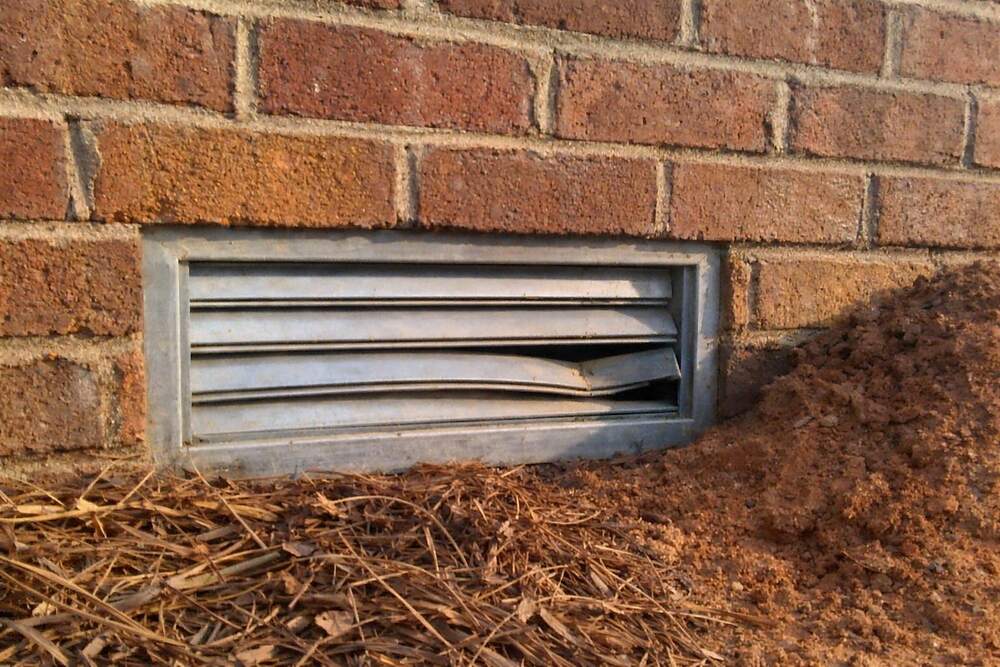
Below the floor the list is consistent: foundation vents whose screening went decades ago, a band joist that has taken moisture where the grade sits high, gaps at the corners of an attached carport slab, and a crawl space access door that is usually a panel rather than a hung door. Above, a wide low roofline produces more eave corners than the footprint suggests, particularly where a carport or a later garage ties in at one end.
The attics on these houses are generally reachable and readable, which speeds the trapping stage up considerably compared with an older intown house. The crawl space is where the hours go.
Pines and what they do differently
Tucker lots carry a lot of tall pine alongside hardwoods, and pine behaves differently from oak in two useful ways. Pines drop needles that build a thick mat against a foundation line, and they shed limbs high rather than spreading low over a roof.
The needle mat is the one worth acting on. Pine straw banked against a foundation wall covers the vents, hides the bottom of the wall from inspection, holds moisture against the band joist and provides cover at exactly the height an animal uses. Clearing a visible strip along the foundation line is free, takes an afternoon, and makes the next inspection far more accurate.
Hardwood limbs are still the roof route. A roof rat travels branches, wires and trunks by preference and ranges about 150 yards from its den according to UF/IFAS, so an oak over a low ranch roof delivers the animal directly. Cutting limbs back from the roof plane is the highest-value free action, and on a single-story house it is achievable work.
Carports, garages and the conversions
Almost every Tucker ranch has a carport, an attached garage, or a carport that was enclosed into living space at some point, and each of those is a distinct rodent condition.
An open carport gives protected cover at the foundation line and usually has a storage closet at one end that nobody inspects. An attached garage adds a door sweep that wears at the ends within a few years, plus the wall between the garage and the house, which often has unsealed penetrations for wiring and plumbing. A converted carport is the most productive of the three: the original slab edge, the point where the old open bay was closed in, and the junction between the old and new foundation are all frequently open.
Worth checking on any of the three
Five items cover a carport, an attached garage or a conversion alike.
- The garage door sweep along its whole length, including both ends
- The wall between the garage and the house, at floor level and at the ceiling
- The slab edge where a carport or garage meets the original foundation
- Storage closets and stored bird seed or pet food
- The attic access above a garage, which is sometimes a separate space
What We Handle in Tucker
Tucker properties usually need work at both levels, and each stage is priced separately.
- Crawl space rodent control: full perimeter vent screening, band joists and access doors
- Rodent exclusion: the roofline and the foundation closed together in galvanized steel
- Roof rat removal: attic trapping where hardwood limbs reach a low roof
- Mouse removal: garage sweeps, converted carport junctions and kitchen voids
- Rodent inspection: free, covering both levels on the same visit
- Attic cleanup: long low ranch attics where an occupancy has run
A Typical Tucker Job
The situation: A caller in a 1964 ranch with a converted carport hears scratching in the wall of the converted room and finds droppings in the storage closet at the end of it. Pine straw is banked a foot deep against the rear foundation wall.
What gets done: The inspection finds the junction between the original foundation and the converted carport slab open along most of its length, hidden behind the pine straw and a row of shrubs. Three crawl space vents have lost their screening. Above, the roofline is sound. The quote covers clearing and closing the slab junction, screening the vents, sealing two penetrations in the old carport wall and trapping at floor level.
How it turns out: The straw and shrubs are cut back so the wall can be reached, the vents and two of three sections of the junction are closed first, traps in the converted room wall produce for a week, and the last section is sealed after that. The homeowner keeps the strip along the foundation clear, which is what stops it recurring.
What This Costs in Tucker
A Tucker quote usually carries a real crawl space line as well as a roofline one. For trapping, Angi's Atlanta numbers run from $442 to $1,138 with an average of about $786, and HomeGuide's 2026 national guide puts full-home exclusion at $500 to $2,500.
| Line item | Atlanta (Angi) | National (HomeGuide 2026) | Here |
|---|---|---|---|
| Inspection | $210 to $420 standalone | $0 to $175 | Free |
| Trapping and removal | $442 to $1,138, average about $786 | $250 to $1,200 | Quoted from the inspection |
| Exclusion sealing | No Atlanta figure published | $500 to $2,500 | Quoted from the inspection |
| Attic cleanup | No Atlanta figure published | $600 to $2,500, to $4,000 severe | Quoted from the inspection |
All of these are typical-job bands from published sources, confirmed at the free inspection. What pushes a Tucker ranch up is a full crawl space perimeter with every vent gone, a converted carport junction, or a band joist that needs carpentry where the grade and the pine straw have kept it damp. What keeps it down is a simple roof with four eave corners and a readable attic.
Rat holes around a building
What a burrow looks like, and where it leads.
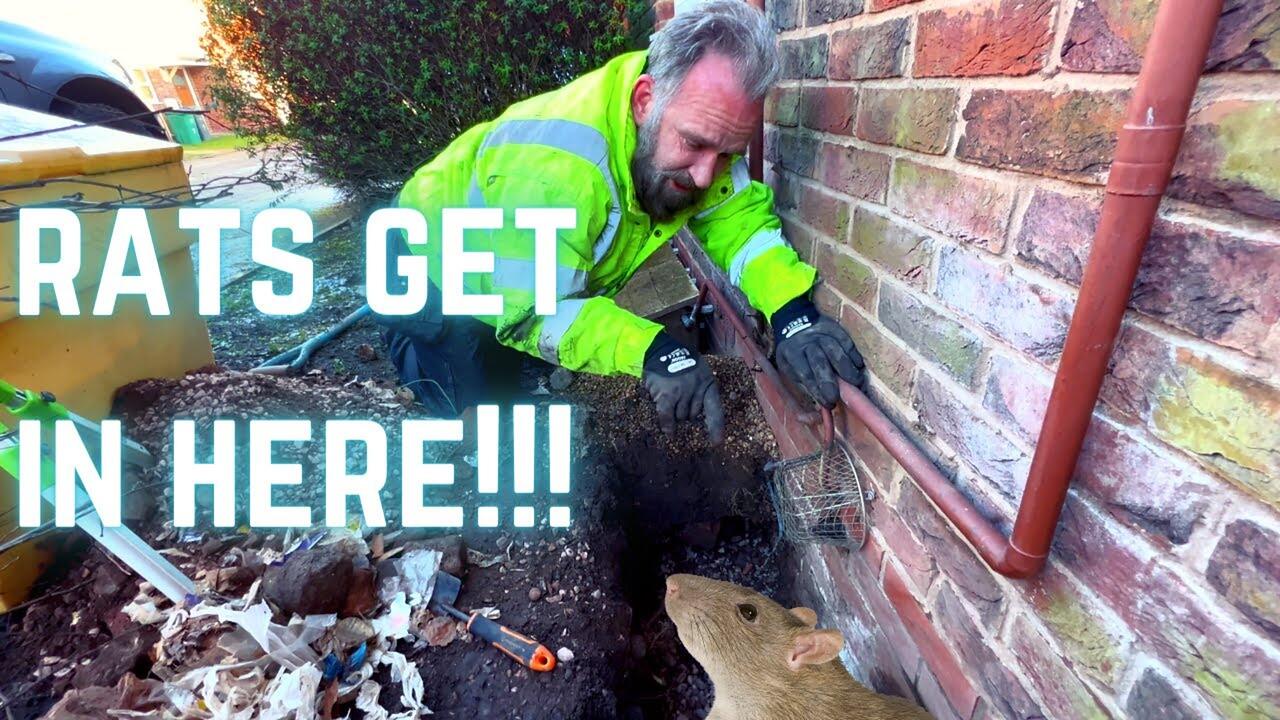
Video: RAT holes around your house? How to stop rats burrowing, from Pest Interceptors.
Does pine straw against the house really matter?
More than most people expect. A deep mat of needles against a foundation wall covers the vents so nobody can see them, holds moisture against the band joist so the wood softens, and provides cover at exactly the height an animal travels. Clearing a visible strip along the foundation line takes an afternoon, costs nothing, and makes both the inspection and the sealing more effective. Keeping it clear afterward is what stops the condition returning.
Our carport was converted years ago. Is that relevant?
It is one of the most productive places to look on this housing stock. A conversion leaves a junction between the original foundation and the old carport slab, a wall that used to be exterior and is now interior with penetrations nobody sealed, and frequently a storage closet nobody inspects. That junction is often open along most of its length and hidden behind planting, which is why it survives several contractors.
Why does the inspection take so long on a small house?
Because a ranch on a crawl space has two complete levels to inspect rather than one. Somebody physically goes under the house and walks the whole perimeter, checking every vent, the band joist along each run, the access door and each utility penetration, before the roofline gets its ladder. A single-story house with a simple roof still takes an hour or two for that reason, and a survey that skips the crawl space has seen half the building.
Who is licensed to do rodent work in this part of DeKalb County?
A company with a Georgia Department of Agriculture structural pest control license in Category 29, Household Pest Control, and a designated certified operator for the category, working under a written contract as the state rules require. The licensing is statewide rather than local. Where the animal turns out to be a gray or southern flying squirrel, a Department of Natural Resources nuisance wildlife control permit is needed too; rats and mice are exempt species.
Nearby Areas We Serve
The same contractors cover the towns around Tucker, and the service area runs across DeKalb County and the rest of metro Atlanta.