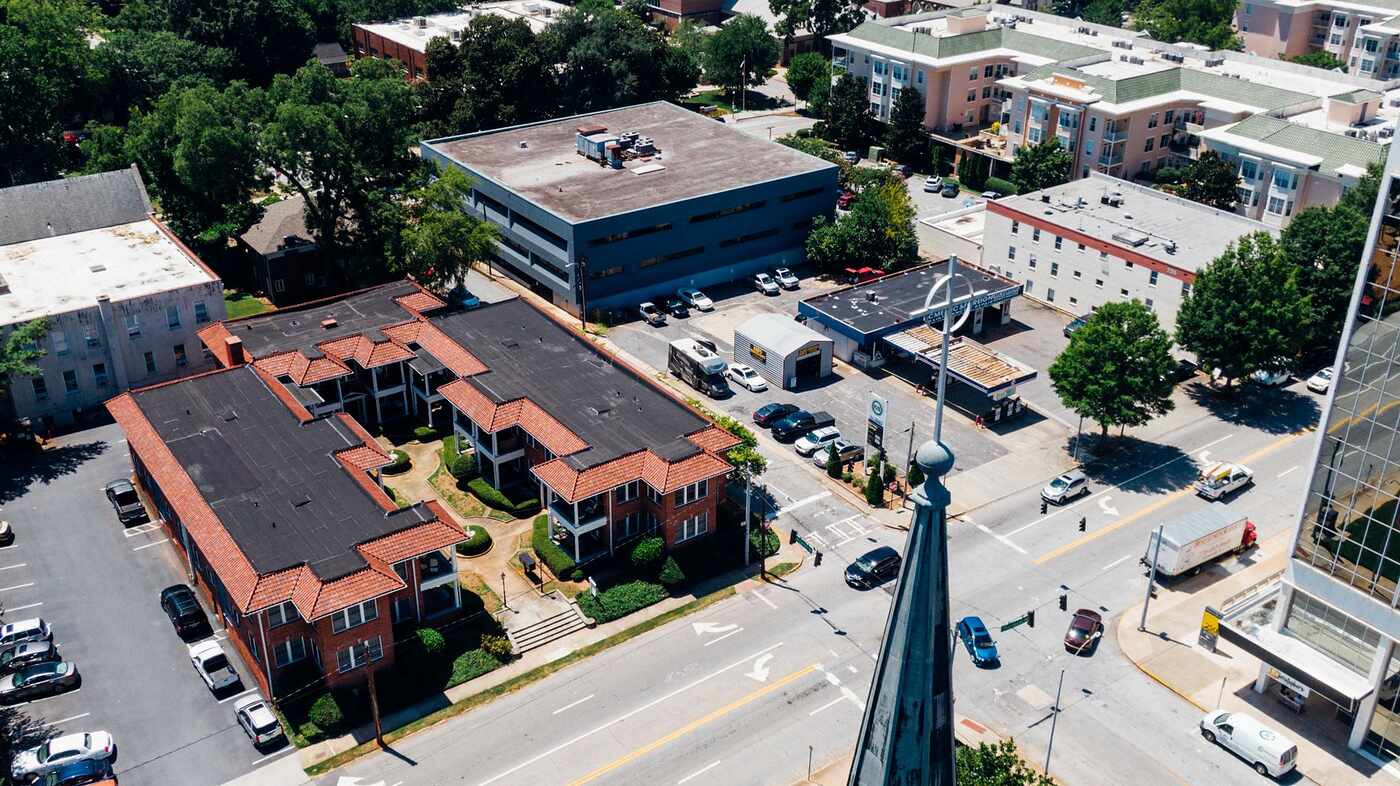
Rodent Removal in Chamblee, GA
Chamblee grew up around a rail line and still has the industrial and commercial stock to show for it, mixed in with small post-war houses and a long run of restaurants. Each of those is a different job.
- Rail corridor and older industry
- Small post-war houses
- Restaurants and commercial stock
Free Inspection in Chamblee
The free inspection covers the roofline from a ladder, the attic, the crawl space or slab edge, the interior and the exterior, and on a commercial property it starts at the waste area instead. Chamblee sits in DeKalb County about twelve miles northeast of downtown Atlanta, either up Peachtree Industrial or on the MARTA gold line, and contractors cover the city and the corridors around it.
The phone is answered at any hour, and inspections and site visits run from seven in the morning until seven at night, seven days a week. Nothing is charged for the visit and the quote is written afterward with each stage on its own line. Book one by calling or through the contact page.
The rail corridor and the older commercial stock
Chamblee developed as a rail town and the corridor still runs through the middle of it, with older warehouse, light industrial and commercial buildings along its length. That stock behaves differently from housing and needs a different approach.
Large older buildings give rodents scale and cover: dock doors that no longer seal at the bottom corners, personnel doors propped through the summer, racking that provides a protected route the length of a building, and service yards where waste collects. Norway rats work that environment at ground level rather than in a roof space. A building of this kind is treated as a site, starting outside at the waste area and working in, with the structural corrections logged individually. That work sits on the commercial rodent control page.
An active rail or industrial corridor also runs continuously, which means the exterior pressure on a neighboring property does not stop. For a business on that edge the realistic aim is a closed building and a managed waste area rather than an empty neighborhood.
The houses around the center
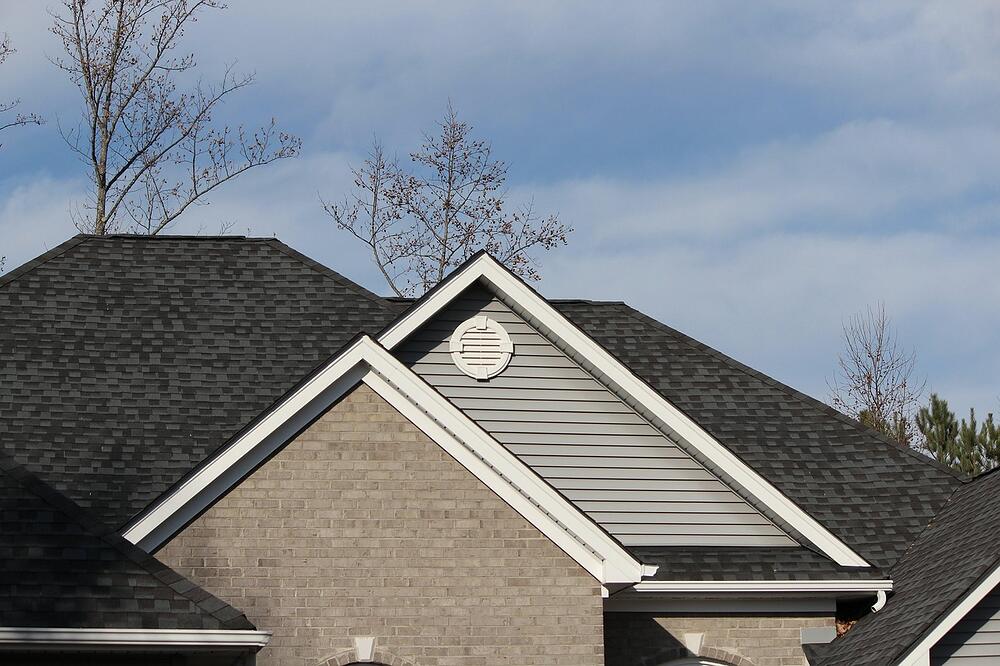
The residential stock near the middle of Chamblee is modest and mostly post-war: small one-story houses on crawl spaces or slabs, with simple roofs, carports or later garages, and lots that have been built on again in recent years. It is a housing type that seals up quickly and cheaply once somebody has looked at it properly.
The openings are predictable. Foundation vents with the screening gone on the crawl space houses, a garage or carport wall penetration, a worn door sweep, a dryer vent with a gap around the duct, and the four roof returns at the eave corners. On a slab house the foundation part of the inspection becomes a look at the wall base, the utility penetrations and the garage, which is a much shorter list.
Restaurants along the corridor
The Buford Highway corridor through this part of DeKalb County is one of the densest restaurant strips in the metro, and a kitchen is a different problem from a house. The pressure comes from the back: the dumpster pad, the delivery door, the void behind a cook line, the gap under a walk-in, and floor penetrations for drains and gas lines.
What decides the outcome on a restaurant is the exterior waste area and the documentation. Georgia requires rodent control services be performed under a written contract, and a health inspector reads the file before looking at a device: the service agreement with the license details, a current site map, a record per visit and a corrective action log showing structural items being closed rather than monitored. Shared dumpster areas between neighboring tenancies are the usual complication, and a report that says so plainly is more useful than one that does not.
What We Handle in Chamblee
Residential and commercial work are both arranged here, and these are the services Chamblee properties call for most.
- Commercial rodent control: kitchens, warehouses and older commercial buildings along the corridor
- Rodent exclusion: dock corners, door sweeps and utility penetrations as well as house rooflines
- Roof rat removal: attic work on the residential streets around the center
- Mouse removal: kitchens, storerooms and small post-war houses
- Crawl space rodent control: vent screening and perimeter work on the older houses
- Rodent inspection: free, and the starting point for a commercial corrective action list
A Typical Chamblee Job
The situation: A caller managing a small restaurant near the corridor has staff finding droppings behind the cook line in the mornings. The unit shares a service yard and a dumpster area with three neighboring tenancies, and a health inspection is due in a few weeks.
What gets done: The survey starts in the shared yard and finds lids propped open, a broken slab edge against the building and a delivery door sweep worn through at both ends. Inside, the void behind the line opens at an unsealed gas line penetration, and the ceiling void above the line runs through to the next tenancy. The corrective action list is written first, then the interior trapping plan, with the shared-yard items identified as outside the caller's sole control.
How it turns out: The sweep and the penetrations are closed in the first week with photographs logged against each item, and the slab edge is repaired. Interior trapping runs three weeks and stops. The file goes to the inspection with the license details, a current site map and a list of closed items, and the shared yard is raised with the landlord in writing.
What This Costs in Chamblee
Residential pricing follows the openings and commercial pricing follows the site survey, so the published residential bands are a floor rather than a quote. Angi puts Atlanta rat removal at $442 to $1,138 with an average around $786, and HomeGuide's 2026 national guide puts full-home exclusion at $500 to $2,500.
| Line item | Atlanta (Angi) | National (HomeGuide 2026) | Here |
|---|---|---|---|
| Inspection or site survey | $210 to $420 residential standalone | $0 to $175 | Free |
| Trapping and removal | $442 to $1,138, average about $786 | $250 to $1,200 | Quoted from the inspection |
| Exclusion and structural correction | No Atlanta figure published | $500 to $2,500 for a full home | Quoted per opening |
| Ongoing commercial program | Not published | Not published | Quoted by frequency, priced apart |
Every residential figure is a typical-job band confirmed at the free inspection. A small post-war house here sits at the bottom of the sealing band because there are few openings and the roof is simple. A commercial building on the corridor sits outside these figures entirely and is priced from the survey, with the initial knockdown separated from any ongoing program.
What is moving inside the walls
How noise in a wall cavity gets traced.
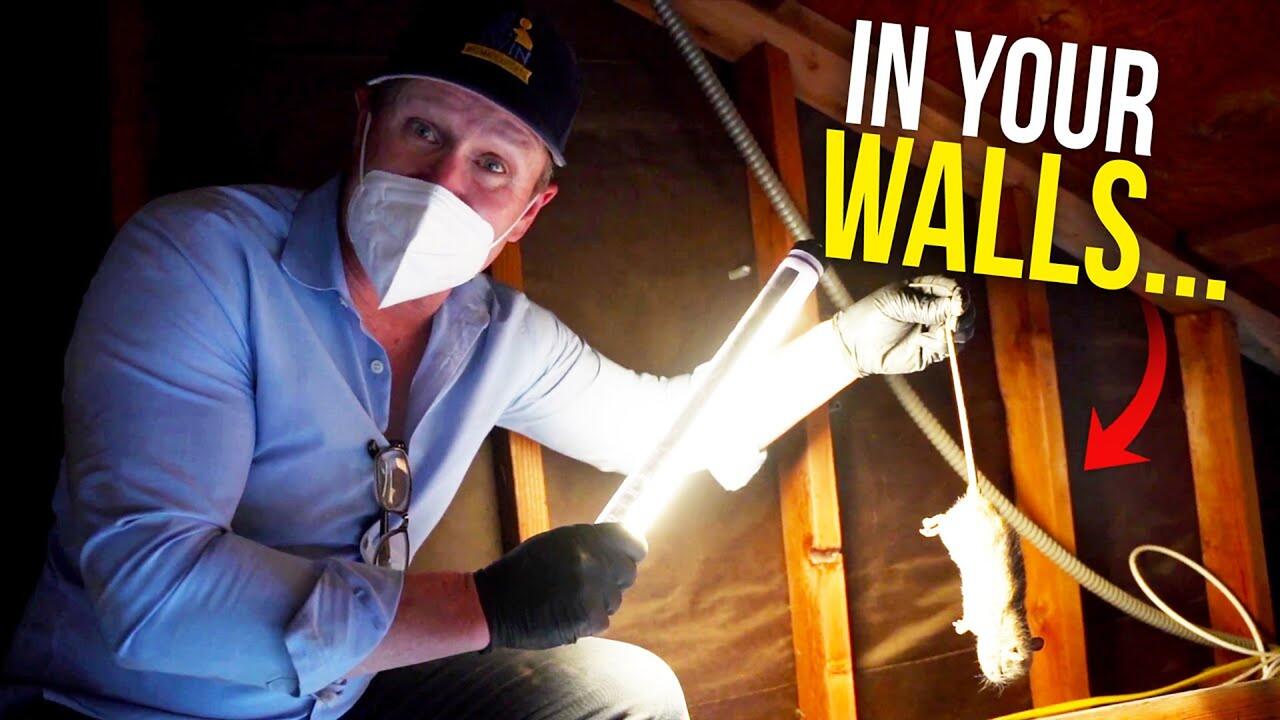
Video: Rodents in your walls? Here's what you do, from Twin Home Experts.
Our dumpster area is shared with other units. What can be done?
Your building gets closed and the shared area gets documented. A shared service yard with propped lids and overfilled containers will sustain a population regardless of what happens inside one tenancy, so the honest output is a report showing what has been sealed on your side, what the yard is contributing, and what would need to change. A landlord or a management company with that in writing can act on it; a stack of monthly service tickets gives them nothing.
What does a health inspector want in the file?
Four answers without anyone explaining them: who is licensed, what was found, what was done and when. That means the written service agreement with the Georgia Department of Agriculture license details, a current site map with devices numbered, a service record per visit showing findings and actions, labels for anything applied, and a corrective action log. The log is what shows structural problems being closed rather than monitored indefinitely.
My house is on a slab. Does that change the inspection?
It shortens the part under the floor and moves the attention elsewhere. There is no crawl space to enter, so the ground-level work becomes the wall base, the utility penetrations, the garage and any door sweep, which is a much shorter list. The roofline part of the inspection is unchanged: the roof returns at each eave corner, any gable vent and the penetrations for bath fans and flues still get a ladder.
How long does the work take on a small house here?
Usually days rather than weeks. HomeGuide gives two or three days for a handful of animals and as much as a couple of months for a heavy one, and a compact post-war house with four eave corners and a handful of foundation vents is normally at the short end. Roof rats are wary of new objects, so traps are left in place at least a week regardless, which sets the floor on the schedule.
Nearby Areas We Serve
The same contractors cover the towns around Chamblee, and the service area runs across DeKalb County and the rest of metro Atlanta.