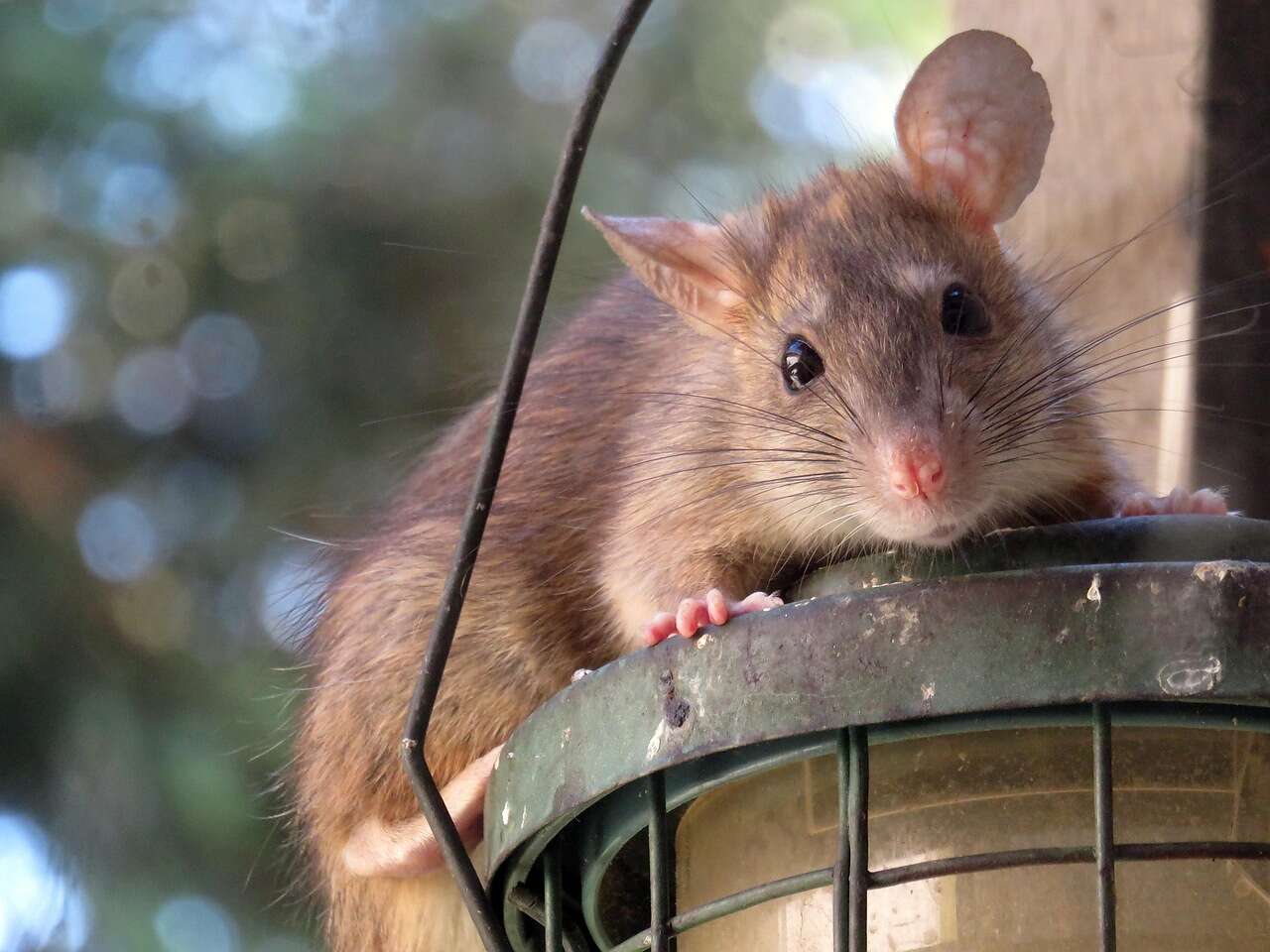
Roof Rat Removal in Atlanta, GA
Running across the ceiling after dark almost always means a roof rat that came off a limb and in at the roof return. Trapping empties the attic and sealing is what stops the next one following it.
- Free roofline and attic inspection
- Poison-free trapping by default
- Openings closed to a quarter inch
What roof rat removal covers on an Atlanta house
It covers four things: identifying the animal, finding every way it gets in, trapping the ones already inside, and closing the openings so the attic stops being available. The inspection that starts it is free and produces a written list with photographs attached.
On a metro Atlanta house the work concentrates at roof level. A ladder goes up at the eave before anyone opens the attic hatch, because the way in is above head height on most of the stock here. The roof return, the corner where a soffit runs into the roof deck at the eave, is the opening local contractors name first, and it is open on gable and hip roofs of every decade. Gable vents with perished screening, gaps behind a pulled fascia board, and the penetrations cut for bath fans, flues and a chimney chase make up the rest of the list.
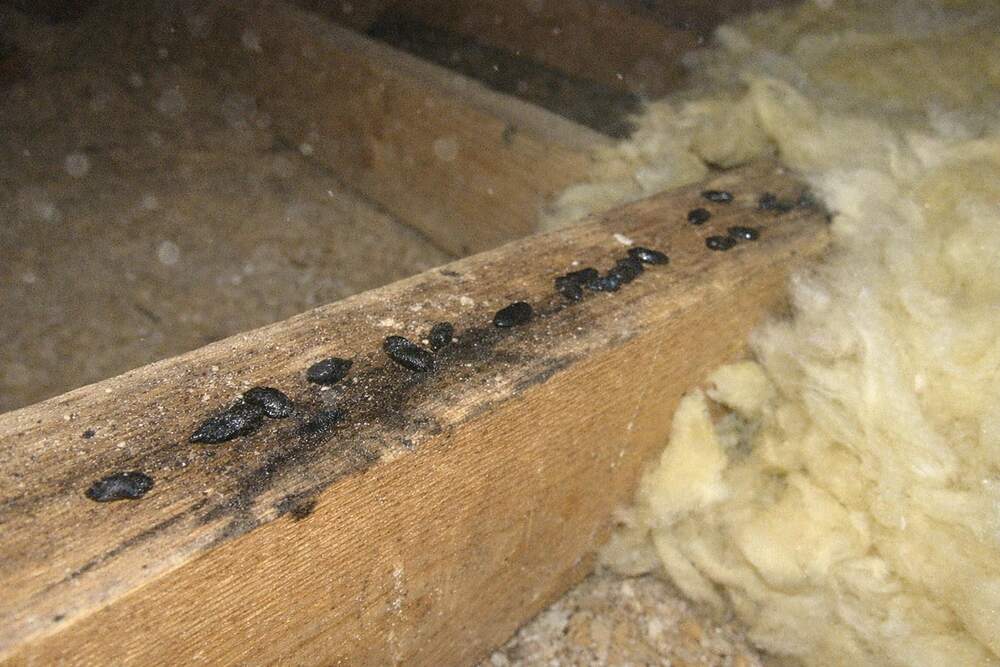
Inside, the attic is read for evidence rather than for the animal. Droppings along a joist, a greasy rub mark where a body has passed the same point repeatedly, insulation pushed into a hollow, chewed wire casing and a urine stain on the drywall above a bedroom all tell you where the runs are, and the runs are where the traps go.
What sits outside the scope
Structural repair beyond closing a rodent opening is a separate trade, and so is a full roof replacement. Where a fascia board has rotted through or a soffit panel has failed, the quote says whether the sealing is a permanent repair or a closure ahead of carpentry. Attic cleanup and insulation replacement are priced on their own lines as well, since plenty of attics need the trapping and nothing more.
Work out roughly what this job costs in Atlanta
Six questions, priced from the Angi Atlanta and HomeGuide 2026 bands printed further down the page. The range is wide because the roofline and the crawl space are the two variables nobody can price from a form.
Bands come from Angi's Atlanta cost page and HomeGuide's 2026 national guides. Every figure is confirmed at the free inspection.
The signs that point to a roof rat rather than something else
Noise after dark that travels horizontally across a ceiling is the clearest single sign. Roof rats are nocturnal, they run joists and top plates rather than wandering, and the sound moves in a line instead of staying in one spot.
The droppings are the next check. UF/IFAS puts roof rat droppings at a quarter to half an inch long, banana shaped with pointed ends, and they collect where the animal pauses: along a joist, in the corner of a closet shelf under a hatch, on top of ductwork. Rub marks show up as dark smears at the pinch points where a run passes a rafter or a pipe.
The rest of the evidence list
Six further signs turn up on a house with an established attic occupancy.
- Insulation pushed aside or hollowed out in one bay rather than evenly disturbed
- Chewed casing on wiring, which UF/IFAS notes rats do and which can potentially start a fire
- Gnawing at the edge of a soffit panel, a fascia board or a vent louver
- A urine stain spreading on ceiling drywall, usually noticed as a shadow before it is understood
- A dog or cat fixed on one point of the ceiling at the same time every night
- Fruit or nuts in the yard opened and emptied rather than carried off
One sign on its own proves little. Three of them in the same part of the house is an attic occupancy, and the time of night narrows the species before anyone climbs anything.
Roof rat, Norway rat, house mouse, gray squirrel or flying squirrel
Five animals produce nearly every attic and wall call in metro Atlanta, and getting the identification right changes the traps, the permits and the price. Species confusion is real enough that homeowners describe two different companies disagreeing over whether a young animal was a rat or a mouse.
Roof rat
The attic species here, and the subject of this service. UF/IFAS describes it as arboreal: it travels along branches, wires and trunks by preference and ranges about 150 yards from its den. It breeds through the year in a warm climate, with a gestation of 21 to 23 days, litters of five to eight and four or five litters a year, reaching maturity at three to four months. Activity is after dark, and it is wary of anything new in its environment, which is why traps are left in place at least a week.
Norway rat
Heavier and ground-bound. It burrows, works the foundation and the crawl space, and shows up under the floor of an intown bungalow or around a dumpster pad rather than over a bedroom ceiling. Same quarter-inch rat-proofing standard, different level of the building. That work sits on the crawl space rodent control page.
House mouse
Smaller, quieter, and concentrated in kitchens, garages and wall voids near food. UF/IFAS puts the opening a mouse needs at a quarter of an inch against half an inch for a rat, so a mouse gets in where a rat cannot. Noise is a light scratching in a cabinet or behind an appliance rather than a run across a ceiling. See mouse removal.
Eastern gray squirrel
Daytime noise, heaviest at first light and again before dark, and heavier footfalls than a rat. It uses the same roof returns and gable vents, so a sealed roofline solves both animals, but a squirrel is protected in Georgia and the trapping is governed differently.
Southern flying squirrel
The animal most often reported as rats in North Georgia attics. It is nocturnal like a roof rat, which is where the confusion starts, but it is colonial, so several are usually present, it nests inside the insulation rather than running joists, and the sound is lighter: a scurry and a roll, sometimes with chattering. Flying squirrels are protected, so trapping one for hire requires a contractor holding a Georgia Department of Natural Resources nuisance wildlife control permit alongside the pest control license, and the animals must be released on site or humanely euthanized rather than relocated. Rats and mice are exempt from those rules and may be taken at any time.
Snap traps, bait stations and poison compared
Trapping is the default on an occupied house, and the reason is where the animal dies. UF/IFAS states plainly that trapping greatly reduces the risk of a poisoned rat dying inside a building, and a rat that dies inside a wall becomes a second job.
| Method | How it behaves | Where it fits |
|---|---|---|
| Snap traps in the runs | Kills at the trap, so the carcass is recovered on the next check. Needs placement on an active run and a week of patience because roof rats avoid new objects. | The standard approach in an attic over living space. |
| Exterior bait stations | Locked, tamper-resistant stations placed away from the structure. The EPA notes common anticoagulants kill four days to two weeks after feeding begins, so the animal moves before it dies. | Occasionally used on exterior pressure at a commercial site, rarely inside a house. |
| Loose poison inside | The animal dies wherever it happens to be, often in a wall cavity or above a ceiling. It also does nothing about the opening it came in through. | Nowhere on a job done properly. |
The line about poison making rodents thirsty so they go outside to die is folklore, and homeowners who have lived through it treat anyone repeating it as a warning sign. If a quote leads with bait and says nothing about the roofline, it is a quote for a recurring problem rather than a solution. Dealing with the aftermath of that decision is covered on dead rodent removal.
Steel against foam
Galvanized hardware cloth, sheet metal and proper vent screening are what hold at an opening. Expanding foam on its own is what a cheap quote usually means, and a rat chews through it. Foam has a place as a backing behind metal, sealing the edges after the real barrier is fastened.
Why Atlanta produces so much roof rat work
The canopy is the reason. Roof rats travel branches by preference, and a neighborhood of mature hardwoods with limbs lying over rooflines gives them a route onto the roof that never touches the ground. That is why cutting limbs back from the roof appears at the top of every local prevention list, and it is a line item worth asking about on any quote.
The building stock does the rest. Asphalt shingle gable and hip roofs with soffit, gable and ridge venting are the norm across the metro, and the roof return is a feature of that construction rather than a defect in any one house. Pre-1940 intown bungalows in Grant Park, Kirkwood and Virginia-Highland add low, cut-up attics that are often unfloored, which makes the trapping slower and the inspection harder. The 1960s to 1990s stock in Dunwoody, Sandy Springs and East Cobb adds two-story attics with ridge vents and taller rooflines.
Climate keeps it running all year. Mild winters and a humid subtropical summer mean roof rats breed through the calendar rather than in a season, so there is no dormant period to wait out. Calls climb with the first real cold snaps between October and December, when both rats and flying squirrels move from the trees into attics, and there is a second rise in early spring.
Humidity also decides what happens after. Soiled insulation molds faster here than in a dry climate, which is why an attic left uncleaned after a heavy occupancy tends to turn into an attic cleanup a few months later.
What is the cheapest way to get rid of rats in Atlanta?
Closing the openings, which costs more on the first invoice and far less across five years. Every other route leaves the house available, and an available house in a canopied neighborhood gets reoccupied.
The arithmetic is straightforward. A trapping-only job that empties the attic buys a quiet few months, and then the same roof return admits the next animal from a den that UF/IFAS puts within about 150 yards. Paying for trapping twice costs more than paying for trapping once and sealing once. A bait-only plan is cheaper still to start and adds an odor call and a drywall cut to the total when the animal dies in a wall.
Where money can be saved
Five actions cost nothing and reduce what the contractor has to price.
- Cut the limbs back yourself before the visit, since that removes the route at no cost
- Clear ivy, wood piles and dense ground cover away from the foundation and the wall line
- Fix the obvious mechanical problems, such as a garage door sweep that no longer touches the slab
- Stage the work: seal the roofline first and leave cosmetic carpentry for later
- Skip the insulation replacement where the inspection finds the contamination is confined to one bay
What does not save money is a standalone inspection fee. Angi puts a paid Atlanta rodent inspection at $210 to $420, and homeowners describe paying around $75 just to receive a bid elsewhere. The inspection arranged from this number costs nothing and still produces the itemized written quote.
What drives the price of a roof rat job here
Four things move the number: how many openings the house has, how long the activity has been running, whether the attic needs clearing afterward, and how hard the roofline is to reach. A single-story ranch with two open roof returns is a different job from a two-story with dormers, a complicated valley and a chimney chase.
| Line item | Atlanta (Angi) | National (HomeGuide 2026) | Here |
|---|---|---|---|
| Rodent inspection, standalone | $210 to $420 | $0 to $175 | Free |
| Rat trapping and removal | $442 to $1,138, averaging about $786 | $250 to $1,200 | Quoted from the inspection |
| Full-home exclusion sealing | No Atlanta figure published | $500 to $2,500 | Quoted from the inspection |
| Attic cleanup and decontamination | No Atlanta figure published | $600 to $2,500, to $4,000 where severe | Quoted from the inspection |
Treat each of those as a typical-job band rather than a price. The Atlanta figures come from Angi's local cost page and the national ones from HomeGuide's 2026 guides, and a national figure is never an Atlanta figure. The free inspection is what turns a band into a quote with trapping, sealing and cleanup on separate lines.
Ask about the warranty terms
Exclusion warranties are common in this market and their terms vary a lot. Ask whoever attends what the warranty covers, how long it runs and whether it renews, and ask for the answer on the written quote rather than in conversation. Georgia requires rodent control services be performed under a written contract in any case.
How long is a roof rat job likely to run in Atlanta?
Days for a handful of animals and weeks to a couple of months where the occupancy is heavy. HomeGuide puts trapping a small number at two to three days and a severe infestation at one to two months, and those figures match what Atlanta homeowners describe.
The floor on the trapping is set by the animal. Roof rats are wary of new objects, so a trap set today may not produce until the fourth or fifth night, and a set is left at least a week before it gets moved. Pulling traps early is the most common reason a job appears to fail.
The ceiling is set by the openings. Where a roofline is open in several places and there is a limb over it, the population resupplies as fast as the trapping removes it, and the count never falls. That is why the openings with no traffic are closed at the start rather than the end.
A realistic schedule
Most roof rat jobs run to the same shape, with the trapping stage setting the length.
- Day one: inspection, list of openings, written quote
- Within the first few days: quiet openings sealed, traps set in the active runs
- Week one to three: checks and resets until the runs stop producing
- After the runs go quiet: last openings closed, limbs cut back
- Then, where it is warranted: cleanup and insulation
Anyone quoting a fixed completion date before the inspection is guessing. Four months with no resolution appears in homeowner threads often enough that a stated plan matters more than a stated deadline.
Services that usually go with this one
Trapping is one stage of an attic job, and these pages cover what runs beside it.
- Rodent Exclusion: Closing every opening down to a quarter inch, at the roofline and at the crawl space, in galvanized steel rather than foam.
- Attic Cleanup: Droppings, nesting and soiled insulation removed under respiratory protection, then the deck cleaned and treated.
- Rodent Inspection: A free walk of the roofline, attic, crawl space and yard, photographed, with an itemized written quote from it.
How the pieces fit together is covered on the about page, and the contact page has the hours and the address.
The method that actually ends it
Why trapping alone rarely finishes a rat problem.
Video: Most Effective Rat Control Method Nobody Talks About, from Arrow Pest Service.
How the roof rat work runs
Five stages in a fixed order, because reversing two of them leaves an animal sealed inside the house.
-
Describe it on the phone
Where the noise is, what time it starts, how long it has gone on and what you have found. That separates a roof rat from a squirrel before anyone drives out.
-
Free inspection
Ladder at the eave, then the attic, then the exterior and the trees. Every opening is photographed and listed, and the quote is written from that list.
-
Close the quiet openings
Galvanized hardware cloth, sheet metal and vent screening go over the openings with no current traffic, so nothing gets shut inside the structure.
-
Trap the active runs
Snap traps set on the runs the evidence shows, left at least a week because roof rats avoid new objects, then checked and reset until the runs go quiet.
-
Close the last runs
The remaining openings are sealed once nothing has moved for several nights, limbs are cut back from the roof, and cleanup is quoted if the attic warrants it.
What to expect
Five things happen on nearly every roof rat visit, so the day holds no surprises.
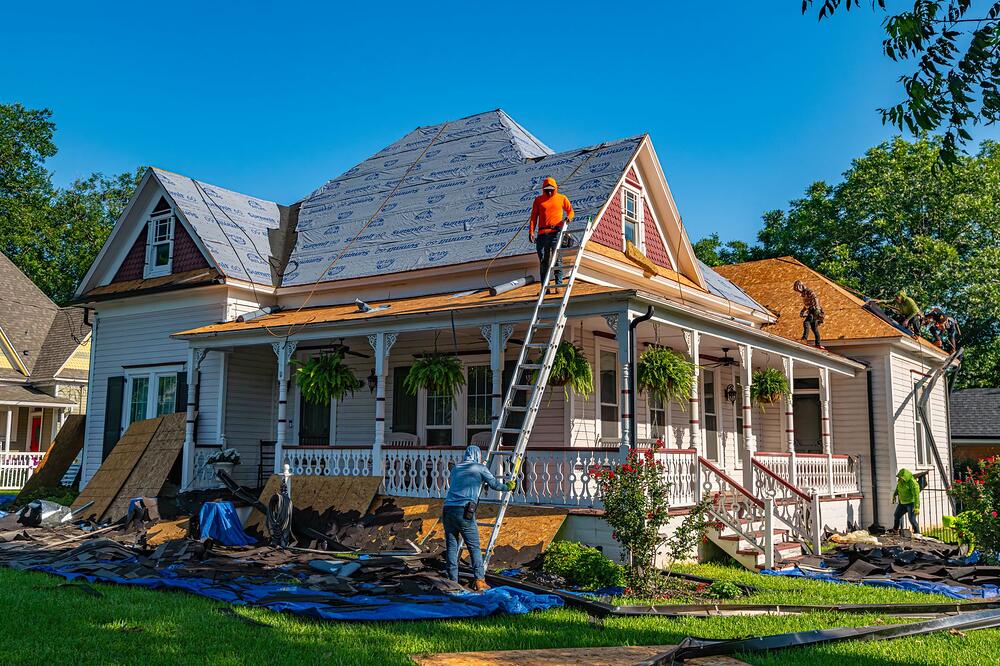
- A ladder at the eave before the attic hatch is opened
- Photographs of each opening rather than a verbal summary
- Trapping, sealing and cleanup priced on separate lines
- Traps left in place at least a week before any are moved
- A walk of the yard for limbs and ivy touching the house
Why roof rat calls go to these contractors
The roofline gets read before the attic
A roof rat job is decided outside the house. The roof return, the gable vents, the fascia line and the penetrations get inspected from a ladder first, because trapping in an attic whose openings nobody has counted is guesswork. The list of openings, with photographs, is what the sealing quote is built from, and it is yours whether or not you go ahead with any of the work.
A quarter inch is the rat-proofing standard, per UF/IFAS.
Traps stay long enough to work
Roof rats are wary of anything new, so a set that produces nothing on night two is a normal set rather than a failed one. Traps are left in place for at least a week before anything is moved, and they sit on the runs the droppings and rub marks identify rather than in convenient spots. That patience is why a job ends instead of repeating.
UF/IFAS records roof rats as wary of new objects in their environment.
The species decides the license
Rats and mice are exempt species under Georgia Department of Natural Resources rules and may be taken at any time. Gray, fox and southern flying squirrels are protected, so an attic that turns out to hold flying squirrels needs a contractor with a DNR nuisance wildlife control permit alongside the Georgia Department of Agriculture Category 29 license. Getting that right before the first visit saves a second one.
Both credentials are checkable before work begins.
What Reddit Says About Roof Rat Removal in Atlanta
The strongest pattern in the homeowner threads is that people cannot tell whether a bundled quote is fair. Real numbers posted for work described in similar terms run from under two thousand dollars to tens of thousands, and the recurring question is whether the writer is being taken advantage of. The advice that keeps getting upvoted is to get more than one bid for identical scope and to insist the quote separates trapping from exclusion from cleanup, because a single figure cannot be compared against anything.
The red flags are consistent. A poison-only plan with no sealing gets treated as a sign the company is not serious, and the claim that poison makes a rodent thirsty so it goes outside to die is widely known to be false. Trapping with no sealing draws the phrase that you will just be harvesting rodents. Sealing while animals are still inside draws the opposite warning. A monthly monitoring agreement folded into the removal price, in one case a monthly fee plus a bimonthly charge on top, is read as a contract rather than a solution.
The questions people tell each other to ask are practical: what exactly is included and what is a separate line, is the exclusion warrantied and does the warranty renew, will you clean up and decontaminate or only trap, how many follow-up visits are in the price, and what happens if they come back. A paid inspection around seventy-five dollars just to receive a bid comes up as a real barrier, which is part of why a free one is worth something.
Underneath the practical talk is a tone this trade often misses. People describe losing sleep to the noise overhead, calling it the night scratchies, feeling that the house has been violated, and being told by friends that they are overreacting. That is the actual reason the phone gets picked up at two in the morning, and contractors routed from this number are briefed to treat the sleep as part of the problem rather than a side effect of it.
A common roof rat call from an intown Atlanta bungalow
The situation: A caller in a 1920s bungalow hears something running the length of the back bedroom ceiling shortly after eleven each night, and has stopped sleeping in that room. There are droppings on a closet shelf below the attic hatch, and a water oak drops limbs across the rear roof.
What gets done: The inspection puts a ladder at the rear eave and finds the roof return open at both back corners, plus a gable vent whose screen has rusted out. In the attic a run shows along one joist with rub marks at the rafters and insulation hollowed out over the back bedroom. The quote lists trapping, the three closures in galvanized steel, cutting the limbs back from the roof, and clearing the soiled insulation in that one bay.
How it turns out: The gable vent and one roof return are closed on the first visit since neither is in use, traps go in along the joist run, and nothing moves after the second week. The last return is sealed, the oak is trimmed back, and the insulation in the affected bay is replaced. The caller moves back into the bedroom, which was the point of the whole exercise.
Roof rat questions Atlanta callers ask
Six answers on identification, method, timing and who is licensed to do this work in Georgia.
Call (404) 924-6653How do I know it is a roof rat and not a squirrel?
Time of day settles most cases. A gray squirrel is a daytime animal, heaviest around dawn and again before dark, and it lands heavier on the ceiling. A roof rat runs after dark, in lines rather than in circles. Where the noise is nocturnal but lighter, with a scurrying and rolling quality and sometimes chattering, and where the insulation is nested in rather than run across, the likely animal is a southern flying squirrel. That distinction matters legally, because flying squirrels are protected and need a DNR-permitted contractor.
Why do the traps sit for a week before anyone moves them?
Because roof rats are wary of new objects, a trait UF/IFAS records specifically for the species. A trap introduced into an established run is avoided for several nights before the animal accepts it as part of the environment. Moving the set on night two restarts that clock and makes the job longer rather than shorter. The check schedule stays the same; the traps stay where the evidence put them.
What keeps rats away permanently?
A sealed building envelope and a roofline nothing can reach. Those two together are the permanent part, and everything else is maintenance: limbs cut back from the roof, ivy off the walls, bird feeders and fallen fruit cleared, garbage lids closing properly, and the garage door sweep touching the slab. Trapping removes the current occupants and changes nothing about availability. A house closed to a quarter inch with no branch bridge is a house that stops being an option.
What does roof rat removal cost in Atlanta?
Angi puts rat removal in this market between $442 and $1,138, averaging about $786, which covers trapping rather than a whole job. Sealing is extra and HomeGuide puts full-home exclusion at $500 to $2,500 nationally. Attic cleanup runs $600 to $2,500 in the same national guide, and up to $4,000 where the contamination is severe. Those are typical-job bands from published sources. The free inspection produces the actual quote with each stage priced separately.
Who is licensed to trap rats in Georgia?
The work goes to a company licensed by the Georgia Department of Agriculture for structural pest control in Category 29, Household Pest Control, with a designated certified operator for that category for that category, and the service has to be carried out under a written contract. Rats and mice are exempt under Department of Natural Resources rules, so no wildlife permit is needed for them. Ask whoever attends for the company license number, confirm it on the Department of Agriculture lookup, and ask for proof of insurance before work starts.
Does the attic have to be cleaned out afterward?
Not always, and the inspection decides it. Where the occupancy was short and confined, clearing one bay of insulation is enough. Where droppings and urine are spread across the attic, the CDC recommends respiratory protection and wetting material down before it is disturbed, and warns against sweeping or vacuuming dry droppings, which is work for someone equipped for it. Humidity here also makes soiled insulation mold faster than it would in a dry climate, so a heavily fouled attic is worth clearing rather than leaving. See attic cleanup.