Rodent Removal in Grant Park
Grant Park houses are among the oldest in the city and nearly all of them sit on open brick piers over red clay. That foundation, and the park canopy above it, produce two different rodent problems on the same address.
- Pier foundations and crawl spaces
- Park canopy over the rooflines
- Historic district considerations
What Grant Park houses give a rodent to work with
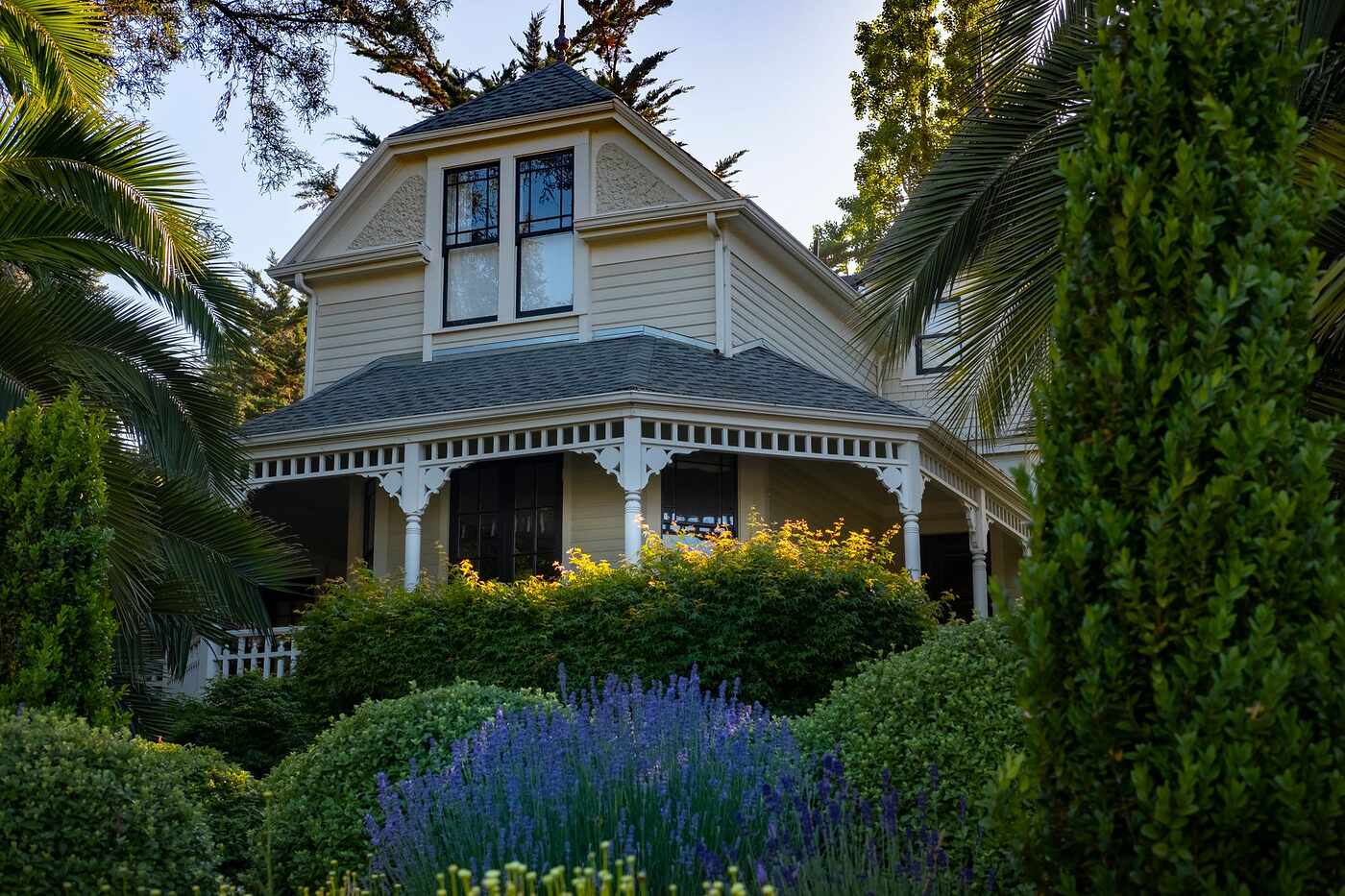
An open pier foundation and a low, cut-up attic, which between them cover both levels a rodent can occupy. The stock here runs from 1880s Victorians through Queen Annes to Craftsman houses of the 1910s and 1920s, and very little of it is later.
Underneath, the houses are raised on brick piers with infill between them and a vented crawl space over bare red clay. A century of damp has usually taken the mortar between piers, dropped at least one infill panel, and softened the band joist where it sits closest to the ground. There is rarely a vapor barrier. That is a Norway rat and house mouse environment, and the animals travel from there up into wall voids through the plumbing chases.
Above, the attics are low, framed for a steep roof rather than for storage, and usually unfloored. They are reached through a hatch in a hallway or a closet and they are hard to move around in, which is why an occupancy in one runs unnoticed for longer here than in a newer house.
Renovation history matters
Grant Park has had decades of restoration work, and every kitchen addition, bathroom relocation and HVAC installation has cut a new penetration through a floor or an exterior wall. Those penetrations are often the entry point rather than the original construction, which is why the inspection asks what has been done to the house and when.
The park canopy and what it delivers to the roofline
The mature tree cover through Grant Park and around the park itself is the roof rat route. UF/IFAS describes the roof rat as arboreal, traveling along branches, wires and trunks by preference and ranging about 150 yards from its den, and a canopy of this age puts limbs across rooflines all over the neighborhood.
That changes what the inspection concentrates on. The roof return where a soffit meets the roof deck, the gable vents on houses that have several gable ends, and the fascia line on a porch roof are all reachable from a limb without the animal ever touching the ground. On a steeply pitched Victorian with dormers, there are more of those junctions than on a simple gable.
Cutting limbs back from the roof is the single highest-value free action available to a Grant Park homeowner, and it is worth doing before any contractor quotes. Where a tree is protected or shared with a neighbor, that constraint goes on the quote rather than being ignored, because the sealing then has to carry more of the load.
Working on a house in a historic district
Grant Park sits within a historic district, and exterior work can be subject to review. Rodent exclusion is rarely the kind of change that triggers a problem, but it is worth knowing where the line sits before a contractor starts fastening metal to a facade.
Most exclusion work is invisible from the street by its nature. Screening fitted behind existing vent louvers keeps the vent looking exactly as it did. Metal fitted into a roof return sits inside the void rather than across the face of it. Foundation vent screening sits behind the original cast iron.
What is worth discussing before the work
- Anything visible from the street, particularly a pier infill closure
- Replacing rather than repairing an original foundation vent
- Any change to a porch skirt or lattice panel
- Whether a damaged original element can be retained and screened behind
- What the finished closure will look like once it has weathered
A contractor who asks what the house is before drilling into it is the right one for this neighborhood. Confirm any district requirement with the city rather than relying on a contractor's understanding of it.
The order the work runs on a Grant Park house
Both levels get inspected on the same visit and then sequenced together, because a house with an attic occupancy and a crawl space occupancy has two populations rather than one.
- The roofline from a ladder: returns, gable vents, fascia, porch roof junctions and any chimney chase
- The attic, read for droppings, rub marks and hollowed insulation rather than searched for an animal
- The crawl space: vents, pier infill, band joist, access door and utility penetrations
- The exterior: limbs over the roof, ivy on the walls, ground cover at the foundation line
- The quote, with carpentry on the band joist priced apart from the sealing and the trapping
Openings with no current traffic get closed first at both levels. The runs in use stay open until the trapping stops producing, then the last openings are closed. On an older house the carpentry usually has to happen before any of the sealing below the floor is worth fastening, because mesh attached to soft wood is decoration.
A representative closure on a Grant Park foundation
The closure that comes up most often here is a foundation vent whose original cast iron louvers are sound and whose screening has gone completely. The right treatment keeps the historic element and removes the opening: new galvanized quarter-inch mesh cut oversize, fitted behind the louvers from inside the crawl space, and fastened to the masonry opening so nothing can be pushed past it.
The second is a failed infill panel between two piers, where brick has dropped out and left a gap running most of a bay. Depending on the structure and on what is visible from the street, that is closed in matching masonry or in fastened sheet metal set back from the face. Both are done after any rotted band joist above them has been cut out and replaced, since the wood is what the sealing has to hold to.
The order an attic job runs in
Five stages, from inspection through to cleanup.
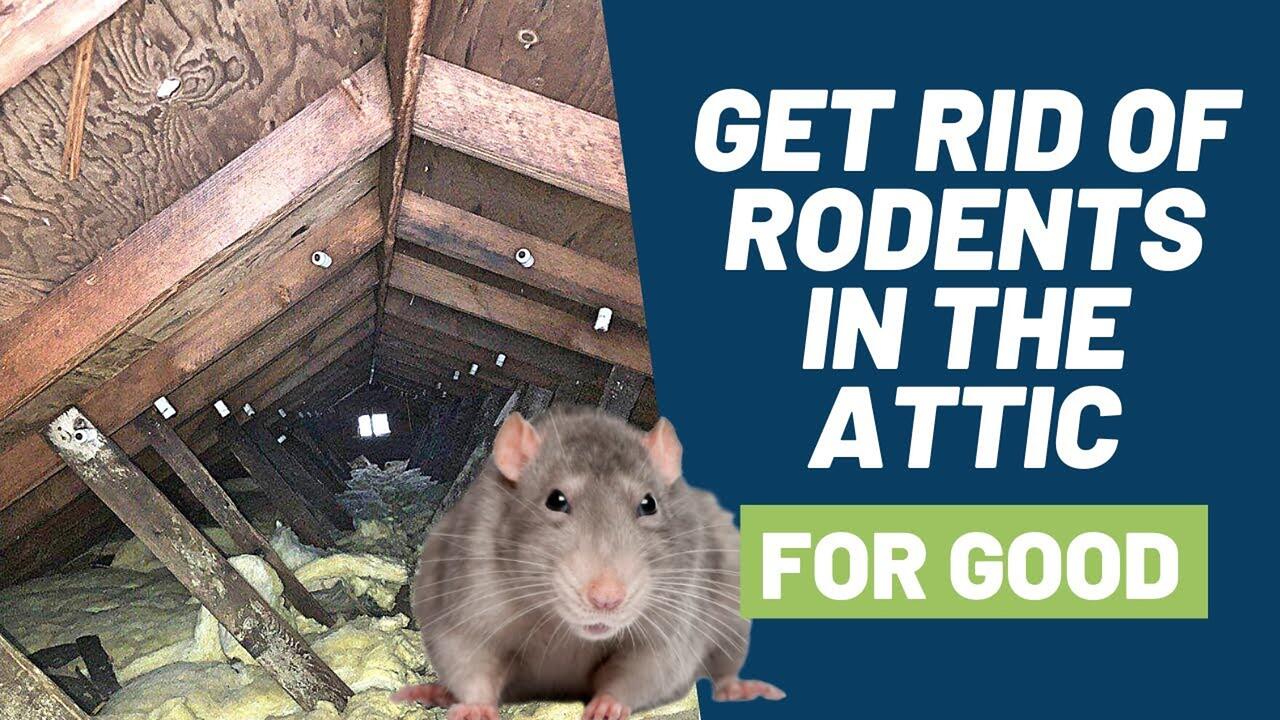
Video: 5 Step Solution to Get Rid of Rodents in Your Attic, from Atticare Construction.
Why a Grant Park inspection takes longer
Two foundations of the problem, literally
Almost every house here gives access at both levels, so the visit covers the roofline and the crawl space rather than choosing one. An attic occupancy and a crawl space occupancy on the same address are two different animals with two different sets of openings, and quoting only one of them leaves half the building available.
UF/IFAS sets the rat-proofing threshold at a quarter of an inch.
Old wood has to be fixed before metal is fastened
Band joist rot is close to universal on pre-1940 pier foundations over damp red clay, and galvanized mesh fastened to soft wood does nothing. Rotted sections are cut out and replaced before any sealing below the floor, and that carpentry is priced on its own line rather than absorbed into a sealing figure nobody can check.
The Department of Energy notes wet insulation performs poorly.
The closure has to suit the house
Exclusion on a historic house is done behind original elements wherever it can be. Screening goes behind cast iron louvers rather than over them, roof return metal sits inside the void rather than across the face, and anything visible from the street is discussed before it is fitted rather than after.
Historic district requirements are set by the city and worth confirming directly.
A common Grant Park call
The situation: A caller in an 1895 Victorian hears movement overhead in the front bedroom after dark and has separately noticed a smell in the hall that comes and goes. The house was restored about fifteen years ago and the kitchen was moved at that time.
What gets done: The inspection finds a roof rat run in the attic above the front bedroom, entering at a gable vent with no screening left, with a limb from the street tree lying across that roof plane. Underneath, the crawl space has two dropped infill panels and an unsealed penetration where the relocated kitchen drain passes through the floor, with mouse droppings along the wall line. The quote separates the gable vent and roof return work, the pier and penetration closures, and two trapping programs.
How it turns out: The quiet openings at both levels are closed in the first week, traps go into the attic run and along the crawl space wall line, and both stop producing inside two weeks. The limb is cut back, the last openings are closed, and the hallway stops smelling of something the caller could never identify.
Grant Park questions
Four answers on foundations, historic work, cost and the trees.
Call (404) 924-6653Do I have to encapsulate the crawl space to fix this?
No. Encapsulation is a moisture project that happens to make rodent work easier, and it is a much larger decision than closing the openings. The rodent job is screening the vents behind their louvers, closing the gaps between piers, repairing the band joist where it has rotted, rehanging the access door with a latch and sealing the utility penetrations. If you are considering encapsulation for other reasons, doing the rodent work first is the right order.
Can exclusion work be done without changing how the house looks?
Almost always, and it is the default approach on this stock. Screening is fitted behind original foundation vent louvers rather than over the front of them, roof return metal sits inside the void rather than across the trim, and porch skirt work is done from behind where the structure allows. Anything that would be visible from the street is raised before it is fitted, and confirming any historic district requirement with the city is worth doing directly.
Do I need to cut the trees back?
Cutting limbs back from the roof is the most valuable free thing you can do here, because the roof rat is an arboreal animal that travels branches by preference and the Grant Park canopy delivers them straight to the roofline. Where a tree is protected, shared with a neighbor or on city property, that constraint goes onto the quote rather than being ignored, and the sealing has to be more thorough in consequence.
What does a job like this cost in Grant Park?
Angi's published Atlanta range for the trapping is $442 to $1,138, with an average near $786, and HomeGuide's 2026 national guide puts full-home exclusion at $500 to $2,500. A Grant Park house tends toward the upper half of the sealing band because there are openings at two levels and because band joist carpentry is common. Those are typical-job bands; the free inspection produces the itemized quote.