Dead Rodent Removal in Atlanta, GA
A heavy sweet smell that builds over several days is a carcass, and it usually follows a poison-only plan. Finding it means opening a wall in the right place, which is why the locating matters more than the removal.
- Locate before cutting
- Small access cut, patched
- Then the opening gets closed
Why an animal dies inside a wall in the first place
Almost always because of bait. The EPA notes that common rodenticides are anticoagulants and that death typically follows four days to two weeks after feeding begins, and in that window the animal carries on living its life inside the building. It dies wherever it happens to be, which is usually a wall void, a floor cavity or the insulation in an attic.
The line that poison makes a rodent thirsty so it goes outside to look for water is folklore, and homeowners who have lived through this treat anyone repeating it as a warning sign. UF/IFAS puts it the other way round: trapping greatly reduces the risk of a poisoned rat dying inside a building, which is the actual reason trapping is the default on an occupied house.
The other ways it happens
Four situations put a carcass in a cavity without any bait being involved.
- An animal sealed in during exclusion work that was done before the trapping finished
- An animal trapped somewhere it cannot get out of, such as a chimney chase or a dropped ceiling
- A natural death in a nest, which happens in any long occupancy
- An injured animal that reaches a void before it dies
The first of those is preventable and it is the reason openings with current traffic are deliberately left open until the trapping stops producing. Sealing a house in one pass on day one is how this call gets generated.
What the odor tells you
The pattern of the smell is the main locating tool before anything is opened. A carcass odor builds, peaks and fades on a curve, and it is worse in warm conditions and near the source.
It is described consistently: heavy, sweet and clinging rather than sharp. It gets stronger in the afternoon when a wall warms up, stronger again when the heating or air conditioning runs, and it travels along the cavity rather than staying in one room. That travel is what makes people cut a hole in the wrong place.
What the timeline usually looks like
- First noticeable a few days after the animal dies
- Building over the following week or so as the process advances
- Peaking, then easing gradually over the weeks after that
- Worse in warm weather and in any part of the house that heats up
- Stronger where the cavity is closed and weaker where it can ventilate
Nobody can give you an exact number of days, and any specific duration quoted for an Atlanta wall is invented. Size of the animal, position, ventilation and temperature all move it, so the honest statement is relative rather than numeric.
How the carcass is located before anything is cut
By narrowing rather than guessing, and that is the part of this job worth paying for. An access cut in the wrong stud bay costs a drywall repair and finds nothing.
The narrowing runs through several passes. The smell is mapped across the room at different heights and different times of day, since the strongest point at floor level often differs from the strongest point at head height. Known rodent runs from the inspection are overlaid, because an animal dies on or near the route it used. Flies, if any, gather at the closest gap to the source. Staining sometimes shows on drywall or on a ceiling.
What gets checked before a wall is opened
Five reachable places are searched first, and a good share of these calls end in one of them.
- The attic and crawl space first, since a carcass in either is reachable without cutting anything
- The base of any chimney chase or closed cavity that a fall could have ended in
- The area behind and beneath kitchen and bathroom cabinets, which open without drywall work
- The cavity above a dropped ceiling or a soffit run
- The stud bay the smell peaks at, confirmed at two heights and two times of day
Where it cannot be pinpointed, the honest answer is that an inaccessible carcass in a wall will pass on its own timeline and the room can be managed in the meantime. Cutting several holes in search of it is rarely the right trade.
The access cut and the repair
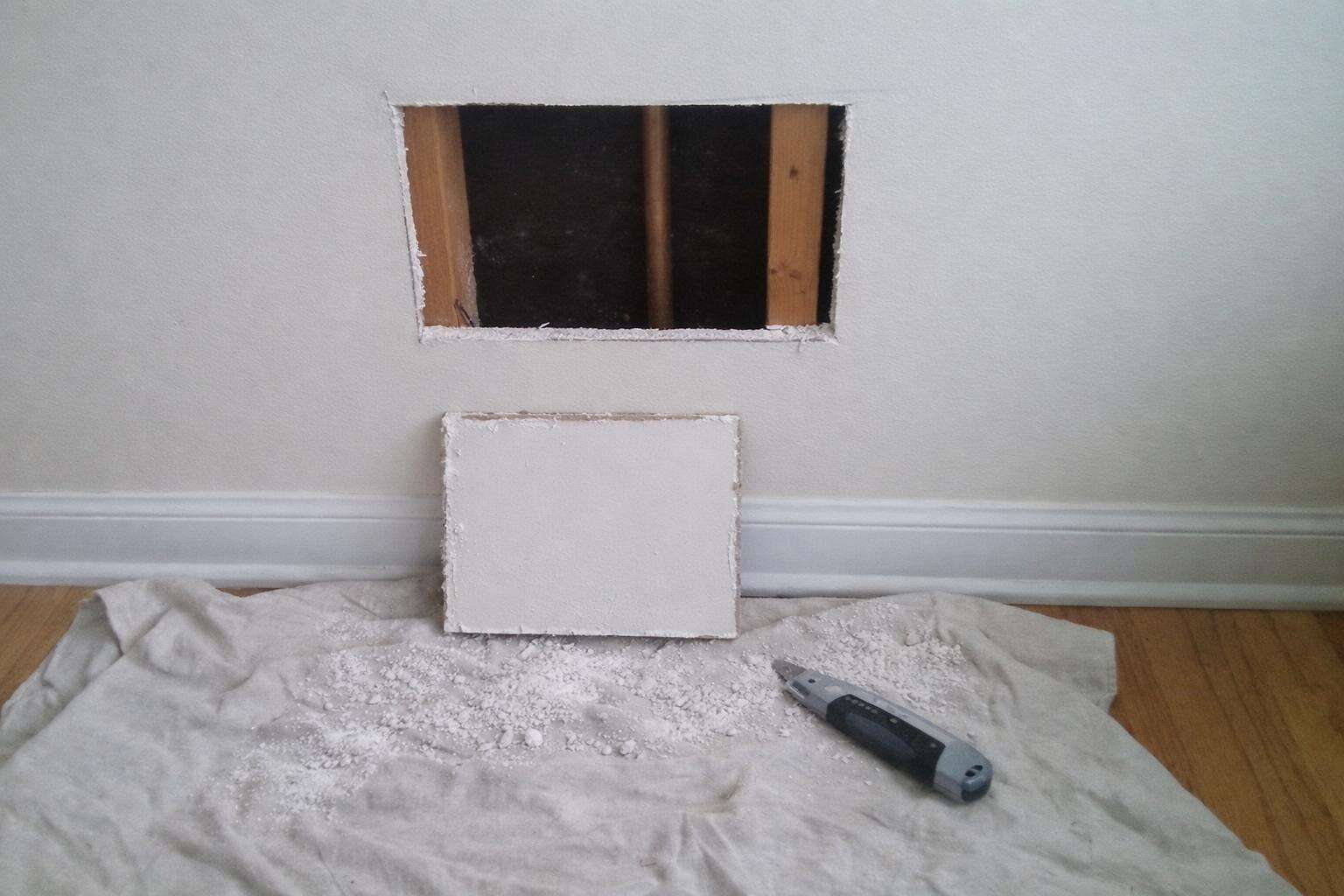
A neat rectangle between two studs, sized to reach rather than to see, and patched afterward. The cut is the standard method because a wall cavity has no other access, and a tidy one is a straightforward drywall repair.
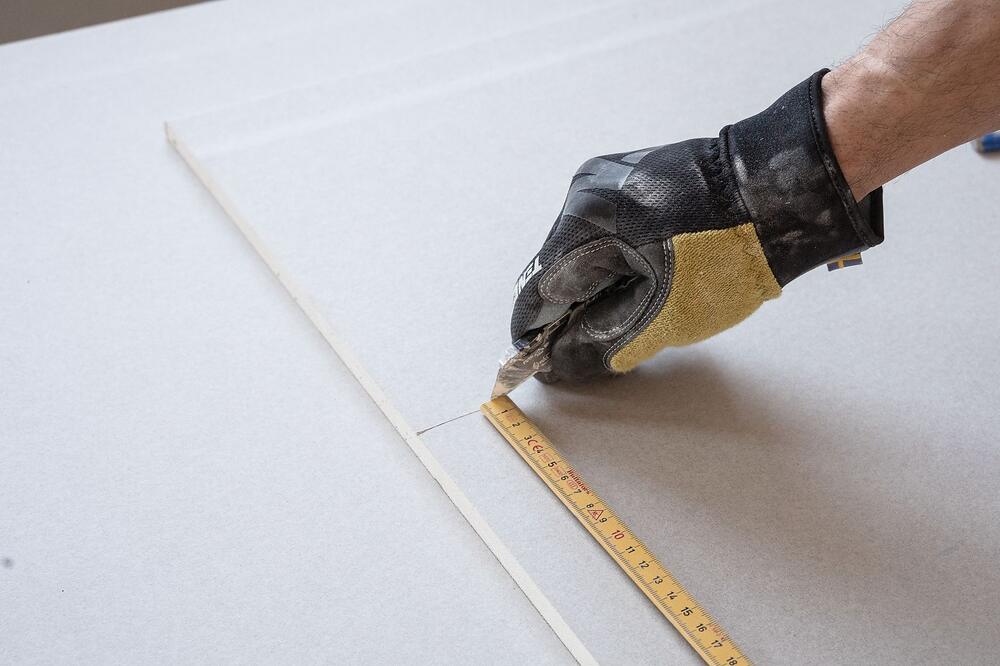
The sequence is: confirm the location, check for services in the bay before cutting, cut the rectangle and keep the removed piece, remove the carcass and any nesting material with it, clean and treat the cavity surface, then reinstate the piece and tape and float the joint.
What the repair should include
- The cut piece kept and reused rather than discarded
- Backing fitted so the patch has something to fasten to
- Tape and joint compound floated flush and sanded
- Priming, with final paint usually left to the homeowner for color matching
- The bay treated and any contaminated insulation in it removed
Ask before the work whether the quote includes the drywall repair or stops at the removal, because both arrangements exist and the difference is a visible hole in a hallway. Ask the same about the painting, which is commonly excluded for good reasons.
What deals with the smell
Removing the source, and nothing else does. The cleaning and deodorizing that follow shorten the tail rather than solve the problem, and any product sold as a fix while the carcass is still in the wall is selling air freshener.
After removal, the cavity surface is cleaned and treated, contaminated insulation in that bay is taken out rather than left, and the space is ventilated. Residual odor usually eases quickly once the source is gone, though soft materials nearby can hold it for a while.
Where the smell lingers after removal
- Insulation in the affected bay, which is why it comes out rather than being left
- Carpet, underlay or a rug directly beneath the location
- Ductwork, where the cavity opened into a return or a boot
- A closed closet or pantry sharing the same wall
What does not work is masking. Odor products in a room with an active source get described in homeowner threads as the thing that made the problem confusing rather than better, because they change the smell without changing the situation.
Why the sealing still has to happen afterward
Because a dead rodent call is a symptom. The animal got in somehow, and removing it changes nothing about the opening it used. Houses that have this call once and do nothing else have it again.
The inspection that goes with the removal covers the same ground as any other: the roof returns and gable vents overhead, the foundation vents, pier gaps and band joist below, and the utility penetrations that let an animal move from a crawl space into a wall void. The sealing quote comes out of that list, priced separately from the removal.
Where the carcass came from a bait program, the sealing conversation is the more important one. Bait with no exclusion produces exactly this outcome on a repeating cycle, and the way out of the cycle is to close the house and trap what remains. That work sits on rodent exclusion and roof rat removal.
The sequencing rule that prevents a repeat
Openings with current traffic stay open until the trapping stops producing. Everything else gets closed straight away. A house sealed in a single pass with animals still inside is the most common way this exact call gets created by the previous contractor.
What dead rodent removal costs
HomeGuide's 2026 national guide puts dead rodent removal at $150 to $500, and no Atlanta operator publishes a local figure. The spread is mostly about access: a carcass in an open attic is at the bottom of that band and one behind finished drywall in a hallway is at the top.
| Line item | Atlanta (Angi) | National (HomeGuide 2026) | Here |
|---|---|---|---|
| Inspection and locating | $210 to $420 standalone | $0 to $175 | Free |
| Dead rodent removal | No Atlanta figure published | $150 to $500 | Quoted from the inspection |
| Trapping the rest of the population | $442 to $1,138, averaging about $786 | $250 to $1,200 | Quoted from the inspection |
| Sealing the openings | No Atlanta figure published | $500 to $2,500 for full-home exclusion | Quoted from the inspection |
Treat these as typical-job bands from published sources rather than prices, and note that a national figure is never a local one. The free inspection produces the quote.
What moves the number
Five variables decide where a carcass call sits inside that band.
- Whether the carcass is in an accessible attic or crawl space or behind finished wall
- Whether the drywall repair and priming are inside the quote or beside it
- How many stud bays have to be opened before it is found
- Whether contaminated insulation in the bay comes out at the same time
- Whether a ducted system carried the odor and needs attention
Services that usually go with this one
An odor call almost always turns into one of these once the carcass is out.
- Rodent Exclusion: Closing every opening down to a quarter inch, at the roofline and at the crawl space, in galvanized steel rather than foam.
- Attic Cleanup: Droppings, nesting and soiled insulation removed under respiratory protection, then the deck cleaned and treated.
- Roof Rat Removal: Trapping in the runs the animals are using, sequenced with sealing at the roof returns and gable vents where they got in.
How the pieces fit together is covered on the about page, and the contact page has the hours and the address.
Where the smell comes from
Why the odor lingers, and what ends it.
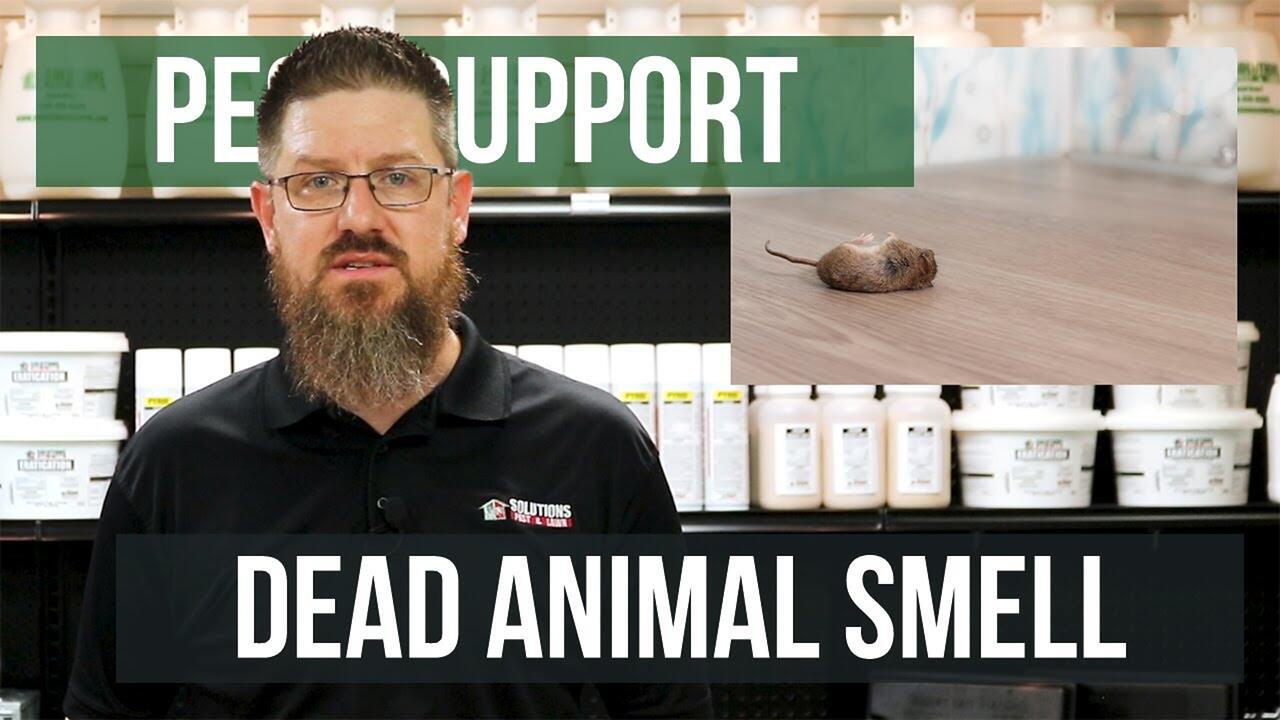
Video: How do I get rid of dead animal smells?, from Solutions Pest & Lawn.
How a dead rodent call runs
Four stages, and the first one is the one that saves money.
-
Map the odor
The smell is read across the room at two heights and at different times of day, and overlaid on the runs the inspection finds. Warm afternoons make the source easier to isolate.
-
Check the open spaces first
Attic, crawl space, cabinet voids, chimney base and any soffit or dropped ceiling, because a carcass found in one of those needs no cutting at all.
-
Open, remove, clean
A neat access cut between two studs after checking for services, the carcass and any nesting removed, contaminated insulation taken out, and the cavity cleaned and treated.
-
Patch and then close the way in
The cut piece reinstated, taped, floated and primed, and a separate quote written for sealing the opening the animal used.
What to expect
Five things that should happen on a carcass call in any Atlanta house.
- The accessible spaces checked before a single cut is made
- Services checked in the stud bay before cutting
- The removed drywall piece kept for the patch
- Contaminated insulation in the bay removed rather than left
- An inspection of how the animal got in, quoted separately
Why the locating is the skilled part
Odor travels, so the smell lies about position
A wall cavity carries odor sideways and upward, so the strongest point in a room is often not the bay the animal is in. Mapping it at two heights and at different times of day, and overlaying the runs found during the inspection, is what turns one access cut into the right access cut. Cutting on the first impression is how a hallway ends up with three patches in it.
The EPA puts anticoagulant death at four days to two weeks after feeding starts.
The open spaces get checked first
A carcass in an attic, a crawl space, a cabinet void or the base of a chimney chase needs no drywall work at all, and a meaningful share of these calls end there. Checking every reachable space before anyone opens a wall is the difference between a straightforward visit and an unnecessary repair, and it costs nothing but time.
HomeGuide puts dead rodent removal at $150 to $500 nationally.
Removal without sealing means a repeat
This call is a symptom of an open house and usually of a bait program running in it. The inspection that accompanies the removal covers the roofline and the foundation, the sealing is quoted separately, and the trapping replaces the bait. Doing the removal and nothing else guarantees the same phone call in a different season.
UF/IFAS notes trapping greatly reduces the risk of a poisoned rat dying indoors.
What Reddit Says About Dead Rodent Removal in Atlanta
Dead animal threads carry a distinct register. People are not frightened so much as trapped, because there is a smell in their home, they cannot locate it, and everything they try changes nothing. Posts describe sleeping in a different room, cancelling plans to have people over, and being unable to explain the situation to anyone who has not had it.
The most useful pattern in the corpus is that this almost always follows bait. Somebody put poison down or had a company do it, and the animal died in a wall a week or so later. The line about poison making rodents thirsty so they go outside is called out as a myth every single time it appears, and the replies are noticeably less patient with it than with most misinformation in this niche.
The practical advice divides into locating and patience. People recommend checking the attic and crawl space thoroughly before cutting anything, mapping the smell at different times of day, and noting that warmth makes the source easier to find. Where a carcass cannot be reached, the accepted answer is that it will pass on its own and that odor products change the smell without changing the problem.
The last theme is what should come next. Threads that end well are the ones where the writer stopped using bait, had the house sealed and switched to trapping. Threads that end badly are the ones where the removal happened, the invoice was paid, and the bait stations stayed exactly where they were.
A common carcass call from an Atlanta home
The situation: A caller has a heavy sweet smell in a hallway that has built over about a week and is worst in the afternoon. A general pest company placed bait in the attic two weeks earlier. There is no smell in the rooms either side, which the caller reads as meaning the source must be in the hallway wall.
What gets done: The attic is checked first, along the runs the droppings identify, and nothing is found there. The odor is mapped along the hallway at floor level and at head height on a warm afternoon, and it peaks at a different bay from the one the caller expected, beside a plumbing chase running down from the attic. The bay is checked for services, a small rectangle is cut, and the animal is recovered along with soaked insulation.
How it turns out: The cavity is cleaned and treated, the insulation in the bay comes out, and the cut piece is reinstated, taped, floated and primed for the caller to paint. A separate quote covers closing the roof return that admitted the animal and replacing the bait program with trapping, because otherwise the same call arrives again in the spring.
Dead rodent questions Atlanta callers ask
Five answers on locating, timing, cutting and what happens to the smell.
Call (404) 924-6653Can you find it without cutting a hole?
Often, and that is always the first thing tried. Attics, crawl spaces, cabinet voids, the base of a chimney chase and the space above a dropped ceiling are all reachable without drywall work, and a meaningful proportion of these calls end in one of them. Where the animal is inside a closed wall cavity, an access cut is the only route to it, which is why the locating work happens first and carefully.
How long will the smell last if I do nothing?
It builds for several days, peaks, then eases gradually over the weeks after that, and it is worse in warm weather and in any part of the house that heats up. Nobody can give you an exact number of days, and any specific duration quoted for your wall is invented, because size, position, ventilation and temperature all move it. Where the location cannot be reached, waiting it out is a legitimate choice and the room can be ventilated in the meantime.
Will an odor product fix it?
Not while the source is still in the wall. Odor products change what the room smells of without changing what is producing the smell, and homeowners describe that as having made the situation more confusing rather than better. After removal, cleaning and treating the cavity and taking out the contaminated insulation in that bay is what shortens the tail, along with ventilating the space.
Does the drywall repair come with the removal?
Ask, because both arrangements exist in this market and the difference is a visible hole in your hallway. On a properly quoted job the cut piece is kept, backing is fitted, and the patch is taped, floated and primed, with final paint usually left to you so the color matches. Get whatever is agreed written on the quote rather than settled on the day.
Should I stop using bait after this?
It is the change that prevents a repeat. The EPA notes common anticoagulants kill four days to two weeks after feeding begins, so the animal dies wherever it is living, and UF/IFAS states that trapping greatly reduces the risk of a poisoned rat dying inside a building. Switching to trapping and closing the openings turns this from a recurring situation into a finished job, which is what the accompanying inspection is for.