Crawl Space Rodent Control in Atlanta
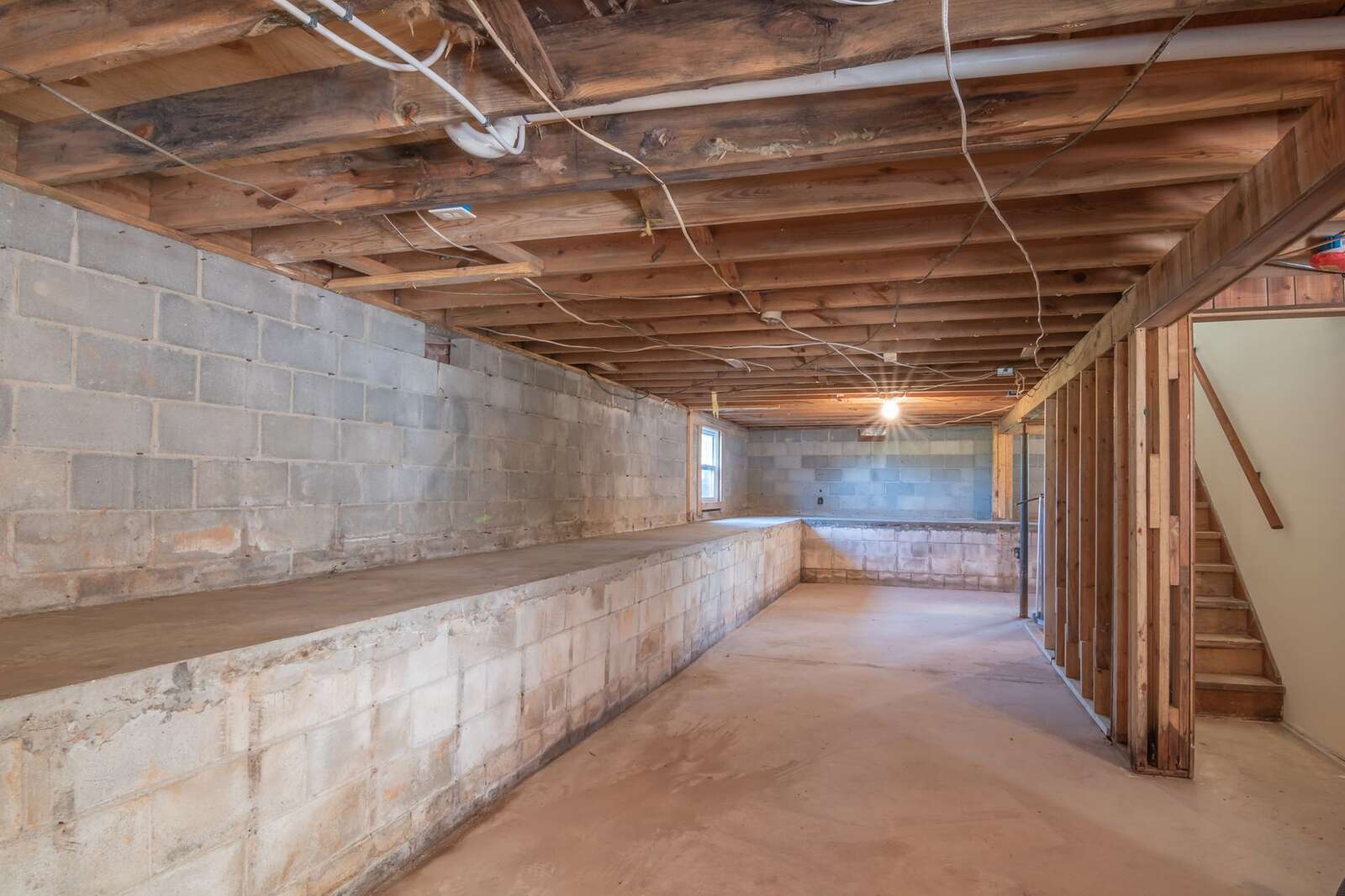
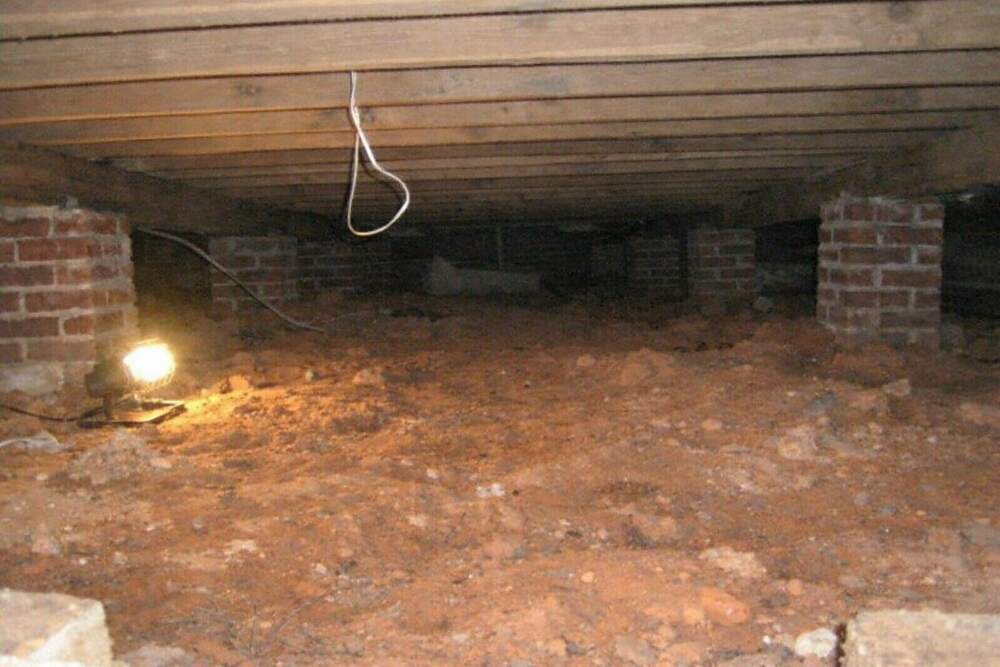
Under a pre-1940 intown house the rodents work at ground level, in an open pier crawl space over red clay with no vapor barrier. The vents, the pier infill and the band joist are the way in.
- Vents, piers and band joist
- Norway rats and house mice
- Free inspection under the house
What an intown Atlanta crawl space is like
Open, vented, and sitting on bare red clay. The 1890s to 1940s Victorians and Craftsman bungalows in Grant Park, Kirkwood, Cabbagetown, Inman Park, Virginia-Highland and Candler Park are raised on brick piers with a perimeter of brick or block between them, and the space underneath breathes through louvered foundation vents.
Three things follow from that construction, and all three are rodent problems. There is usually no vapor barrier over the clay, so the space stays damp. Damp plus a century of time rots the band joist where it sits closest to the ground and softens the mortar between piers. And the perimeter, which was never a continuous wall, develops gaps as infill panels fail and brick falls out.
Post-war ranches in Decatur, East Atlanta and East Point sit on crawl spaces or partial basements and share most of the same problems in a shorter timeframe. The 1960s to 1990s suburban stock further out tends to have a full basement instead, which moves the entry points to the band joist and the utility penetrations.
Why it matters more than it looks
A crawl space is the one part of a house nobody visits. An occupancy under the floor can run for a year before anyone notices, and by then the insulation between the joists is fouled, the ductwork may be chewed, and the animals have found their way up into the wall voids through the same holes the plumbing uses.
Which animals work at this level
Norway rats and house mice, mostly, with eastern chipmunks as the confusion species. Roof rats live overhead, so a crawl space problem and an attic problem on the same house are usually two different animals and two different sets of openings.
Norway rats
Heavy, ground-bound and a burrower. They work the foundation line, the space under a slab or a porch, and the crawl space itself. The rat-proofing standard applies to them exactly as it does to a roof rat: UF/IFAS puts the opening a rat needs at half an inch and takes a quarter inch as the threshold to close to.
House mice
A quarter of an inch is all a mouse needs, so a mouse gets through openings a rat cannot use. Under the floor that means gaps around a water line penetration, a failed mortar joint, or the edge of a poorly hung access door. From the crawl space they travel wall voids upward into kitchens and pantries. See mouse removal.
Eastern chipmunks
Chipmunks burrow at foundations and crawl space walls and get reported as mice at ground level. They are a daytime animal, which usually settles it. The burrowing can undermine a small section of foundation or a walkway, so it is worth identifying correctly even though the indoor risk is lower.
Where the noise is overhead rather than underfoot, the identification questions are different and the page for it is roof rat removal.
The openings that get closed under the house
Six things account for nearly all of it, and the order they get dealt with is set by which of them show current traffic.
Foundation and crawl space vents
Louvered vents with rusted or missing screening are the most common single opening. The fix is new galvanized mesh fitted behind the louvers, which keeps the airflow the vent was built for and removes the gap. Blocking a vent solid creates a moisture problem, so screening rather than closing is the right treatment on a vented crawl space.
Gaps between brick piers
Where infill panels between piers have failed, an opening can run the width of a bay. Depending on the structure that gets closed in masonry or in fastened sheet metal, and on a historic house it is worth asking what the closure will look like from the street.
The rest of the list
Four more openings finish the crawl space perimeter once the vents are dealt with.
- The band joist, where rot at the sill leaves an opening straight into the floor cavity
- The access door, commonly a propped panel, rehung in a frame with a positive latch
- Utility penetrations where water, gas, electrical, HVAC and dryer lines pass the wall
- The gap under a walkout basement door or where a porch slab meets the foundation
Band joist rot is the one that decides the size of the job. Mesh fastened to soft wood is decoration, so any rotted section needs carpentry before sealing is worth doing, and that shows on the quote as its own line.
What changes when the crawl space has been encapsulated
An encapsulated crawl space is a different building and a different job, usually an easier one. The vents are deliberately closed, a sealed liner covers the clay and runs up the walls, and moisture is managed with a dehumidifier rather than airflow.
The advantages for rodent work are real. There are no vent openings to screen, the liner shows tracks and droppings clearly against a clean surface, and the space is dry enough to work in properly. Where an encapsulation is recent and well done, a rodent occupancy stands out immediately.
What to check on an encapsulated space
- Where the liner is terminated at the wall, since a loose or taped termination becomes a run behind the plastic
- The access door, which is often the one part of the system left as it was
- Utility penetrations through the liner and the wall, especially where a line was added after the encapsulation
- The sump or drain, if one was installed, and any exterior discharge line
- Whether the dehumidifier drain line leaves through an unsealed penetration
The problem case is an encapsulation installed over an existing rodent occupancy. Then the liner hides the runs, the droppings sit underneath it, and the work involves lifting and reinstating sections. That is worth knowing about before the quote rather than halfway through.
Can the chewed openings be left for now, or do they have to be repaired with the trapping?
Trapping alone under a house buys a season. The openings are how the animals arrived, and a crawl space that is still open in April is a crawl space that is occupied again by November, when the first cold snaps push everything toward shelter.
Where money has to be staged, there is a sensible order. Close the vents and the access door first, because they are the cheapest openings to fix and among the most used. Deal with the band joist next, since it is both an opening and a structural issue that worsens. Leave cosmetic masonry on the pier infill for last, as long as the opening itself is closed in metal in the meantime.
What does not wait
Five findings need dealing with immediately rather than being staged for budget.
- Chewed electrical casing, because UF/IFAS notes rats chew wires and can potentially start fires
- Chewed HVAC ductwork, which feeds crawl space air straight into the house
- A water line or drain damaged by gnawing
- Rot in a band joist that carries floor load
- Any opening large enough for an animal to get up into a wall void
Waiting costs more than a second trapping bill. Insulation between the joists absorbs urine and, in this climate, molds faster than it would in a dry one, which turns a sealing job into a cleanup and insulation job.
What crawl space work costs and what moves the number
The condition of the perimeter sets the price. A crawl space with six sound vents and a good access door is a short job. One with failed pier infill, a rotted band joist and no vapor barrier is a project with carpentry in it.
| Line item | Atlanta (Angi) | National (HomeGuide 2026) | Here |
|---|---|---|---|
| Inspection under the house | $210 to $420 standalone | $0 to $175 | Free |
| Trapping and removal | $442 to $1,138, averaging about $786 | $250 to $1,200 | Quoted from the inspection |
| Sealing the perimeter | No Atlanta figure published | $500 to $2,500 for full-home exclusion | Quoted from the inspection |
| Cleanup and decontamination | No Atlanta figure published | $600 to $2,500, to $4,000 where severe | Quoted from the inspection |
The Atlanta figures come from Angi's local cost page and the national ones from HomeGuide's 2026 guides. Each is a typical-job band confirmed at the free inspection rather than a price.
What pushes a crawl space toward the high end
Five conditions add hours or trades to work under a floor.
- A band joist that needs sections cut out and replaced before any sealing
- Failed brick infill across more than one bay between piers
- Low clearance, which slows every part of the work
- Insulation between the joists that has fallen and has to be removed first
- Planting, decking or a porch slab blocking access to part of the perimeter
Moisture, insulation and what it has to do with rodents
Damp makes a crawl space attractive and makes the aftermath worse. Bare red clay with no vapor barrier puts moisture into the space continuously, which softens wood, feeds the rot that opens the band joist, and keeps soiled insulation wet.
Compressed insulation stops delivering its rated R-value and damp insulation works badly, both according to the Department of Energy. Under a floor, batts that have been nested in, soaked and pushed out of the joist bays are doing neither the thermal job nor any other. That is a straightforward mechanism rather than a percentage, and no honest number exists for how much performance is lost in a particular crawl space.
What tends to get recommended, in order
Five stages follow each other, and reversing any two of them wastes the work.
- Close the openings and finish the trapping, because nothing else is durable first
- Remove fouled insulation and clean the surfaces underneath it
- Put down a vapor barrier over the clay if there is not one
- Reinstate insulation where it is warranted, with the joist bays properly supported
- Consider encapsulation as a separate decision, which is a moisture project rather than a rodent one
The CDC recommends respiratory protection and wetting material down before disturbing it, and warns against sweeping or vacuuming dry droppings. That applies under a floor exactly as it does in an attic, and it is why cleanup is quoted as its own line rather than folded into the sealing.
Services that usually go with this one
Crawl space work usually pulls one or two of these in behind it.
- Rodent Exclusion: Closing every opening down to a quarter inch, at the roofline and at the crawl space, in galvanized steel rather than foam.
- Mouse Removal: House mice in kitchens, garages and wall voids, closed out at the entry points and trapped in the voids they run.
- Rodent Inspection: A free walk of the roofline, attic, crawl space and yard, photographed, with an itemized written quote from it.
How the pieces fit together is covered on the about page, and the contact page has the hours and the address.
Sealing the outside of a house
Working around a building, closing every gap.
Video: How to keep out mice and other pests: sealing up the exterior, from The Home Mender.
How crawl space rodent work runs
Four stages, with the carpentry sequenced before the sealing wherever wood has gone soft.
-
Get under the house
The full perimeter is walked from inside where clearance allows, and photographed: vents, pier infill, band joist, access door, penetrations and any insulation on the floor above.
-
Repair what mesh cannot fasten to
Rotted band joist sections and failed masonry are dealt with first, because galvanized mesh fastened to soft wood is not a closure.
-
Screen and close
New galvanized mesh behind the vent louvers, metal or masonry across the pier gaps, the access door rehung in a frame with a latch, and every utility penetration packed and sealed.
-
Trap and verify
Snap traps along the runs the droppings and tracks identify, checked and reset until nothing moves, then the last openings closed and the space walked again.
What to expect
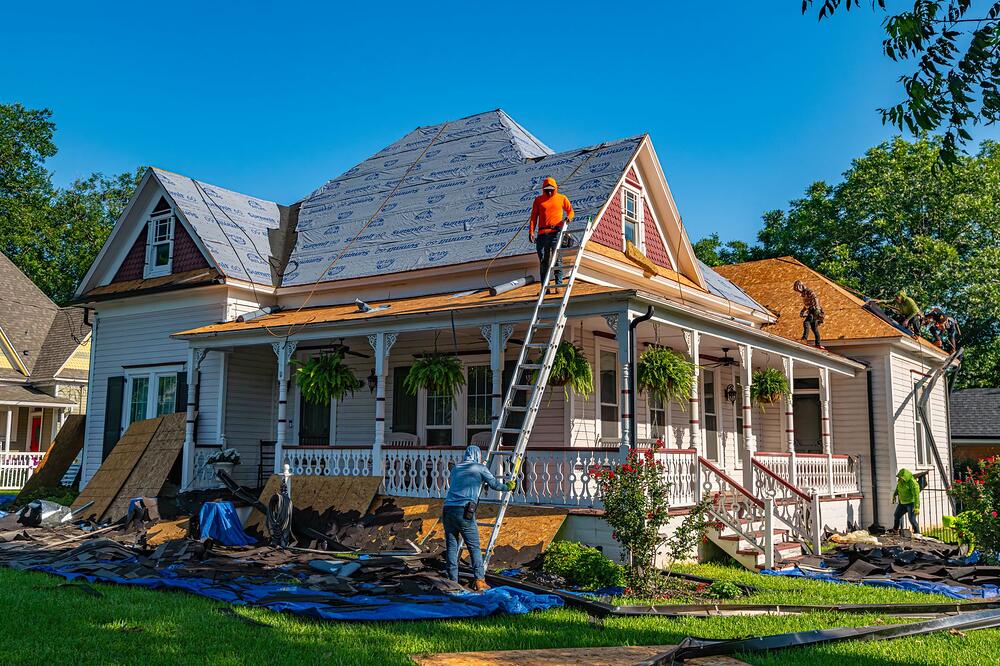
Five things that happen on a crawl space visit, whatever the age of the house.
- Somebody physically under the house rather than a look through the hatch
- Photographs of the band joist and each pier bay
- Carpentry quoted separately from sealing
- Vents screened rather than blocked solid
- The access door rehung with a latch that holds
Why crawl space work needs its own visit
The perimeter is read bay by bay
An open pier foundation has no single wall to inspect, so the work is counting: every vent, every infill panel between piers, the band joist along each run, the access door and each utility penetration. That inventory is photographed and itemized, because a quote that says seal the crawl space on a hundred-year-old house could mean almost anything.
UF/IFAS sets the rat-proofing threshold at a quarter of an inch.
Wood gets fixed before metal gets fastened
The band joist is the point where a crawl space problem becomes a structural one. Rot at the sill opens a route into the floor cavity and gives mesh nothing to hold to, so the rotted sections are cut out and replaced before any sealing is attempted. It appears as its own line on the quote rather than hidden inside a sealing figure.
Damp red clay with no vapor barrier is the usual cause under pre-1940 stock.
Vents get screened rather than blocked
A vented crawl space needs its airflow, so closing the vents solid trades a rodent problem for a moisture one. New galvanized mesh fitted behind the original louvers keeps the vent doing its job and removes the opening. On an encapsulated space the approach changes entirely and the attention moves to the liner termination and the access door.
The Department of Energy notes wet insulation performs poorly.
What Reddit Says About Crawl Space Rodent Control in Atlanta
Crawl spaces produce the most extreme price spreads in the homeowner threads. Quotes for work described in similar language run from a couple of thousand dollars to figures that sound like a renovation, and nobody posting can tell which is fair. The reason surfaces in the replies: one quote is sealing vents, another is replacing a band joist, a third has encapsulation folded into it, and none of the three says so on the page the homeowner was handed.
The advice that follows is always the same. Insist the quote separates trapping from sealing from carpentry from moisture work, and ask which of those the company performs itself. A firm that traps and subcontracts the carpentry prices differently from one that does both, and people who ended up satisfied usually knew which they were dealing with before signing.
Sequencing gets discussed more here than anywhere. Sealing a crawl space with animals still under the floor draws immediate warnings about the smell that follows, since a carcass under a bedroom floor is harder to reach than one in an attic. Trapping with nothing sealed draws the harvesting comment. The version people describe as having worked is closing the quiet openings, trapping, then closing the rest.
One thread in the corpus documents an older house with a very low crawl space solved by screening the whole perimeter, which is the outcome most of these conversations are reaching for. The emotional register is different from the attic threads: less sleep loss, more of a sense that something has been going on under the house unnoticed for a long time, which is usually accurate.
A common crawl space call from an intown Atlanta house
The situation: A caller in a 1924 bungalow notices droppings behind the kitchen kickboard and a smell in the hallway that comes and goes. Nothing has ever been heard in the attic. The crawl space door is a sheet of plywood held in place by two bricks.
What gets done: The inspection goes under the house and finds four foundation vents with the screening gone, an infill panel between two piers collapsed into the clay, and a rotted band joist section under the kitchen where a dryer vent passes through. Insulation between the joists in that area has fallen and is fouled. The quote separates the band joist carpentry, the screening and pier closure, the trapping, and removing the fallen insulation.
How it turns out: The carpentry is done first, then the vents and the pier bay are closed and the access door is rehung in a frame with a latch. Traps go in along the wall line where the tracks run, and produce for about ten days. The fouled insulation comes out, a vapor barrier goes down over the clay, and the kitchen stops smelling of something the caller could never place.
Crawl space questions Atlanta callers ask
Five answers on access, moisture, cost and what gets repaired before anything gets sealed.
Call (404) 924-6653My crawl space is too low to get into. Can it still be done?
Usually yes, though low clearance slows everything and shows up in the price. Where a space cannot be entered at all, most of the work moves to the outside: screening the vents from the exterior, closing the pier bays, rehanging the access door and sealing the penetrations where they pass through the wall. Trapping can often be set from the access opening along the wall line the tracks follow. The inspection establishes what is reachable before anything is quoted.
Should I put down a vapor barrier?
It is worth doing and it is a moisture decision rather than a rodent one. Bare red clay puts moisture into the space continuously, which is what rots the band joist that later becomes an opening, and the Department of Energy notes that wet insulation performs poorly. A barrier also makes the next inspection far easier, since tracks and droppings show on plastic and vanish on clay. It goes down once the trapping and the cleanup are finished.
Will closing the vents cause damp under the floor?
Blocking them solid would, which is why the vents get screened instead. New galvanized mesh fitted behind the original louvers leaves the airflow intact and removes the opening. Closing vents on purpose is part of encapsulation, which is a designed system with a liner and a dehumidifier managing the moisture another way, and that is a separate project rather than something to do halfway.
How much does crawl space rodent work cost in Atlanta?
The trapping sits in Angi's Atlanta band of $442 to $1,138, averaging about $786. Sealing is separate and HomeGuide puts full-home exclusion at $500 to $2,500 nationally, with a crawl space perimeter usually at the higher end of a house's exclusion scope because there are more openings down there. Carpentry on a band joist and removing fouled insulation are their own lines again. The free inspection is what turns those bands into a quote.
Does the insulation under the floor have to come out?
Only where it has been fouled or has fallen, and the inspection decides. Batts that have been nested in, soaked with urine or pulled out of the joist bays are doing no thermal work and hold contamination, so they come out. Insulation in sound bays away from the activity is usually left alone. The CDC recommends respiratory protection and wetting material before it is disturbed, and warns against sweeping or vacuuming dry droppings, so removal is work for somebody equipped for it.