
About Rodent Removal Atlanta
What happens when you call the number, who turns up, and which credentials to confirm before anyone starts work on your house.
- Midtown office
- Metro-wide coverage
- Licensed contractors only
What the phone line is for
The number on every page reaches a dispatcher at any hour, and the purpose of that call is to work out what has happened at the property and get the response moving. You describe where the noise is, what time of night it happens, how long it has gone on and what you have found. That conversation separates a roof rat from a gray squirrel from a flying squirrel before anyone drives out, and it decides which contractor is the right one to send.
From there the nearest licensed contractor covering your area is booked for the free inspection. Site visits run from seven in the morning until seven in the evening, seven days a week. Nothing is priced over the phone, because a quote written without a ladder at the eave is a guess.
The office is at 600 W Peachtree St NW, Suite 1700, in Midtown beside the North Avenue MARTA station. Anything in writing goes through the form on the contact page.
What to expect on the job itself
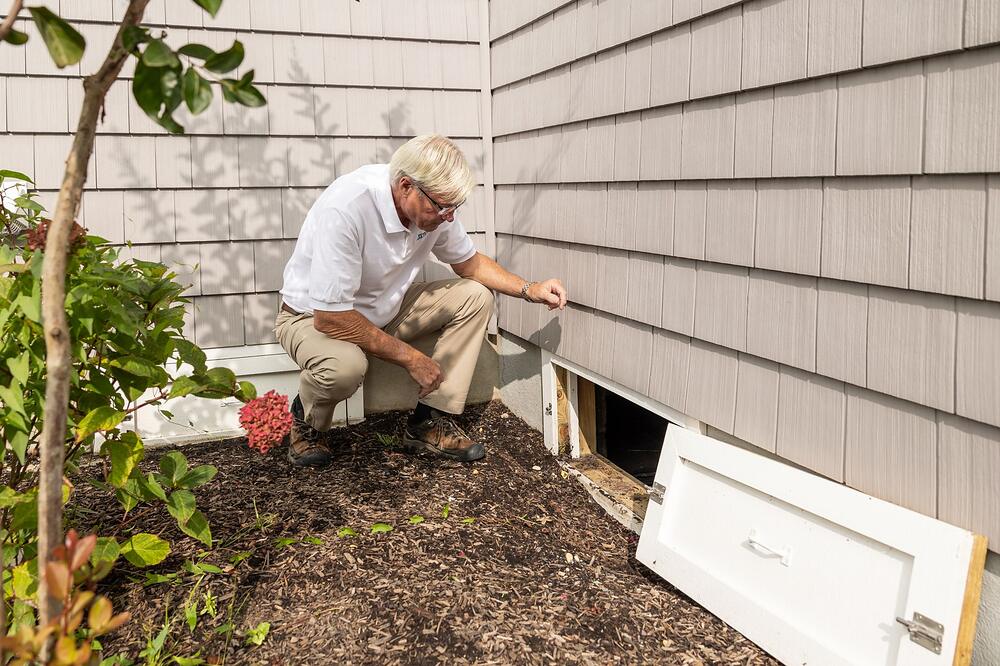
Expect a ladder before anyone opens the attic hatch, because on most Atlanta houses the way in is above head height. The roof return where the soffit dies into the roof deck, the gable vents, the fascia gaps and the penetrations for bath fans and flues get looked at first, then the attic for droppings, rub marks and disturbed insulation, then the crawl space or basement.
Expect the sealing to be described before it is priced. Galvanized hardware cloth, sheet metal and proper vent screens are what hold; expanding foam on its own is what a cheap quote usually means, and a rodent chews through it. Expect traps to stay in place for at least a week, since UF/IFAS notes roof rats are wary of new objects, and expect the last openings to be closed only once the activity has stopped.
Expect plain arithmetic about the calendar. A few animals take days, a heavy infestation takes weeks to a couple of months, and the only thing that puts an end date on either is the sealing.
The Georgia licenses to check before work starts
Rodent control for hire in Georgia sits under Category 29, Household Pest Control, of the Structural Pest Control Act, administered by the Georgia Department of Agriculture through the Structural Pest Control Commission. A company needs a company license plus a designated certified operator in that category, and rodent control is among the services the rules require be performed under a written contract. Company licenses are searchable on the Department of Agriculture structural pest control lookup.
Squirrels are a separate question. The Georgia Department of Natural Resources treats rats and mice as exempt species that may be taken by any means at any time, but gray, fox and southern flying squirrels are protected: trapping them for hire needs a DNR nuisance wildlife control permit, and the animals must be released on site or humanely euthanized rather than relocated. Since flying squirrels are the animal most often mistaken for rats in North Georgia attics, that distinction decides who can legally attend.
Every contractor routed from this number holds the credential the job requires. Ask for the license number, confirm it on the state lookup, and ask to see proof of insurance. A contractor who hesitates at either question has answered a different one.
Where contractors are dispatched
Atlanta and the surrounding metro, across Fulton, DeKalb, Cobb and Clayton counties. The intown districts produce most of the roof rat and crawl space work: Buckhead, Virginia-Highland, Inman Park, Grant Park, Kirkwood and Cabbagetown.
Outside the perimeter the calls come from Decatur, Brookhaven, Chamblee, Dunwoody, Sandy Springs, Roswell, Alpharetta, Marietta, Smyrna, Kennesaw, Tucker, Stone Mountain, East Point and College Park. Restaurants, warehouses and multifamily buildings across the same area are covered under commercial rodent control.
What the free inspection is for
The inspection is the product. Three things come out of it, and all three are yours whether or not any work follows.
A list of openings, photographed
Every gap that a rodent can use gets recorded with a picture attached: the roof return at each corner, gable vents, fascia gaps, bath fan and chimney penetrations, crawl space vents, the band joist, the gaps between piers, and the garage door seal. A list like that is what makes a sealing quote arguable instead of a number.
A quarter inch is the threshold, per UF/IFAS.
An itemized written quote
Trapping, sealing, cleanup, insulation and follow-up visits appear as separate lines with the visit count stated. No contractor in this market publishes a price, so a quote with one figure on it cannot be checked against anything. Georgia also requires rodent control services be carried out under a written contract, so the paperwork is not optional.
Angi puts Atlanta rat removal at $442 to $1,138.
A straight answer on the timeline
How many animals the signs suggest, how long the trapping is likely to run, and what the sealing changes. National cost guides put a handful of animals at two to three days and a severe infestation at one to two months, and hearing that on day one is better than discovering it in week six.
HomeGuide 2026 timelines.
What happens after you call
Five stages between the phone call and a quiet house.
-
The call
A description of the noise, its location and its timing, which narrows the species and decides how quickly a visit is needed.
-
The visit is booked
The nearest licensed contractor covering your part of the metro is lined up for a free inspection between seven in the morning and seven at night.
-
The inspection
Roofline, attic, crawl space or basement, interior signs and the yard, all photographed, with the openings listed.
-
The quote
Written and itemized, with trapping, sealing, cleanup and follow-ups priced separately and the license details on it.
-
The work
Sealing and trapping in the order that keeps nothing shut inside, then restoration where the damage warrants it.
What to expect
Five things worth asking whoever arrives, whatever they quote.
- The company license number, then check it on the state lookup
- Proof of insurance, before work starts
- What the warranty on the sealing covers and how long it runs
- How many return visits are included in the price
- Whether the crew doing the repairs is the crew doing the trapping