Rodent Removal in Alpharetta, GA
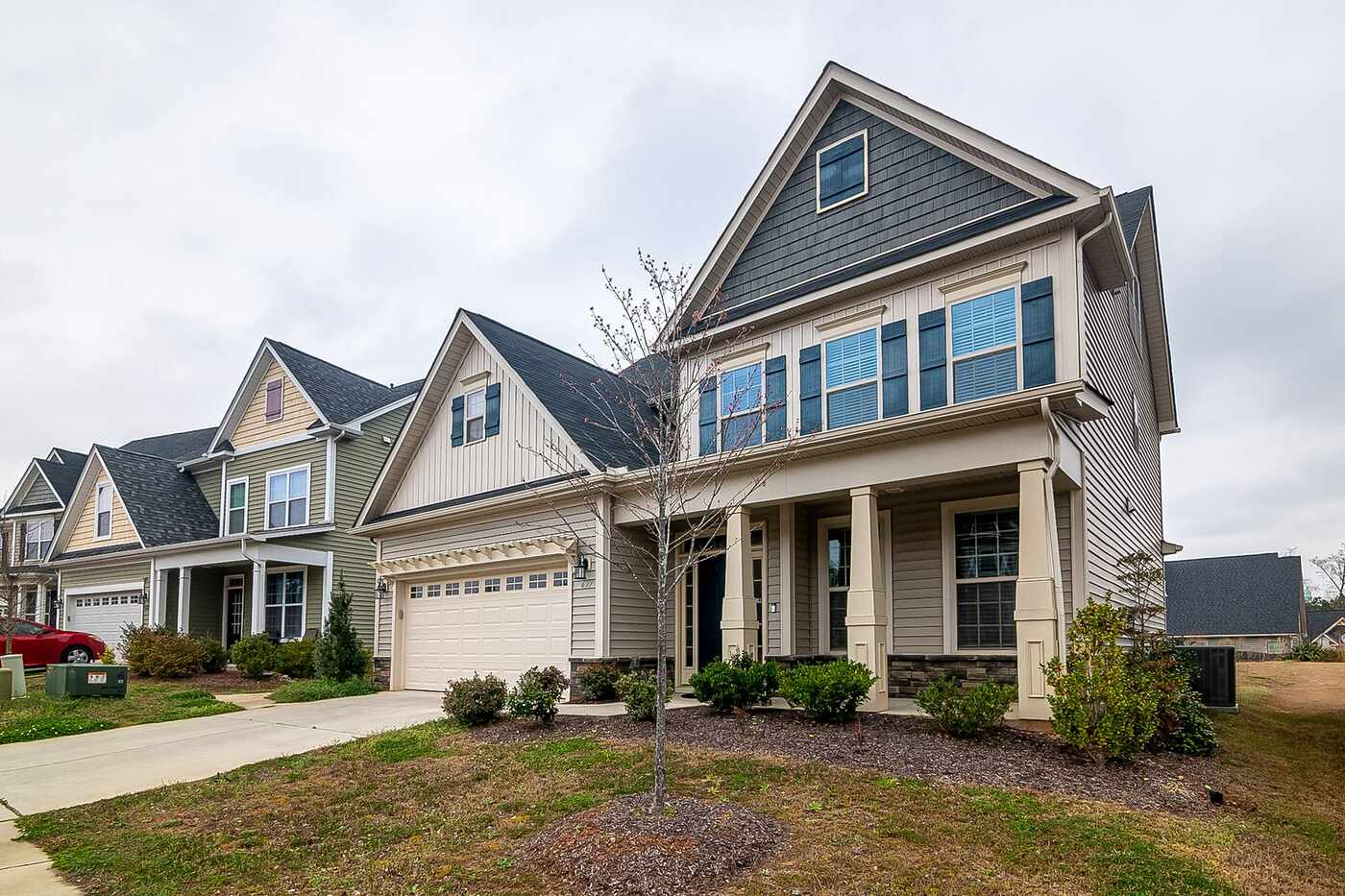
Alpharetta is mostly newer than the rest of the metro, which surprises owners who assume a modern house is sealed. The roof return is a framing detail rather than an age-related fault, and these roofs have many of them.
- 1990s and 2000s subdivisions
- Large cut-up rooflines
- North Fulton along GA 400
Free Inspection in Alpharetta
The free inspection concentrates where this stock opens: a ladder at every eave corner, then the attic, then the basement band joist and penetrations, then the exterior and the trees. Every opening is photographed and listed. Alpharetta sits at the top of Fulton County about twenty-five miles north of downtown Atlanta along GA 400, and contractors cover the city and the north metro around it.
The phone is answered at any hour of the day or night, and site visits are booked between seven in the morning and seven in the evening, seven days a week. There is no charge for the visit and nothing is quoted before it. Call, or use the form on the contact page.
Why newer houses still get rodents
Because the roof return is built in rather than worn in. Where a soffit runs into the roof deck at the eave, the framing commonly leaves a void behind the trim, and that is as true of a house finished in 2004 as of one finished in 1924. What changes with a newer house is the count: large plans with projecting gables, a garage wing, a bay roof and a covered entry can carry a dozen or more of those corners.
The second reason is that the openings a newer house does develop are mechanical rather than structural. A garage door sweep wears through at the ends within a few years. A utility line run late in the build never gets sealed. A dryer vent leaves a gap around the duct. None of those requires the house to be old.
The third is the trees. Subdivisions built here in the 1990s were planted or left with young trees, and thirty years later those trees are over the rooflines. A roof rat travels branches by preference and ranges about 150 yards from its den according to UF/IFAS, so a canopy that has finally grown in changes what the neighborhood produces.

What a large house plan adds
Volume and complexity. A big attic over a large plan gives an occupancy space to live in without producing noise anybody notices, and multiple attic areas separated by framing mean an inspection has to reach each of them rather than one.
Roof geometry compounds it. Every projecting gable, dormer and roof-to-wall tie creates junctions, and valleys terminating at an eave add their own. A house with a three-car garage wing and a two-story entry has more roof edge than its square footage suggests, and the sealing quote reflects the edge rather than the floor area.
The list on a large newer house
- Roof returns at every eave corner across the main roof and the garage wing
- Gable vents, where the design includes them
- Ridge vent terminations at each end of each ridge
- Roof-to-wall ties where a lower roof meets a two-story wall
- Bath fan, kitchen vent and flue penetrations, of which there are usually several
- The garage door sweeps, checked across their full width
- Basement band joist and utility penetrations, usually the shortest part of the list
Creeks, greenway and the yards
Big Creek and the greenway corridor along it give the eastern side of the city a continuous band of cover, and plenty of subdivisions back onto creek buffer or woodland left between developments.
As elsewhere, what matters is the last few feet rather than the corridor. Ground cover and ivy against the foundation, wood piles and stored materials along a rear fence, compost, bird feeders and bins kept against the wall are harborage and food, and a lot backing onto a buffer tends to collect all of them at the back where nobody looks.
Newer subdivisions also tend to have irrigation and drainage features that create small openings: sleeve penetrations through a foundation wall, discharge points at a downhill boundary, and light well or window well details on a walkout basement. None is dramatic and all are quick to close once somebody has looked for them.
What We Handle in Alpharetta
These are the services Alpharetta houses need most, each priced on its own line.
- Rodent exclusion: a dozen or more eave corners on a large plan, closed in galvanized steel
- Roof rat removal: attic trapping now that the subdivision canopy has grown over the roofs
- Rodent inspection: free, and the only way to count the openings on a roof this size
- Attic cleanup: large attic volumes where an occupancy ran unnoticed
- Attic insulation replacement: blown fill flattened along runs, priced by measured area
- Mouse removal: garage sweeps, dryer vents and late utility penetrations
A Typical Alpharetta Job
The situation: A caller in a 2001 house with a three-car garage wing hears scratching over a bonus room above the garage and cannot accept that a twenty-year-old house has a rodent problem. The subdivision was built through woodland and the trees are now well above the roofline.
What gets done: The inspection counts fourteen eave corners across the main roof, the garage wing and a covered entry, and finds three roof returns open plus a roof-to-wall tie where the garage roof meets the two-story wall. The bonus room attic is a separate space from the main attic, reached through its own hatch, and that is where the run is. Both garage door sweeps are worn through at the ends. The quote lists each closure individually along with the sweeps and a trapping program.
How it turns out: The sweeps are replaced and the quiet closures are made in the first visit, traps go into the bonus room attic and produce for six nights, and the last two openings are closed after a quiet week. The homeowner has an arborist clear the limbs back from the roof the following month.
What This Costs in Alpharetta
On this stock the number follows the roof edge rather than the square footage. The trapping falls inside Angi's Atlanta band of $442 to $1,138, which averages about $786, and HomeGuide's 2026 national guide puts full-home exclusion at $500 to $2,500.
| Line item | Atlanta (Angi) | National (HomeGuide 2026) | Here |
|---|---|---|---|
| Inspection | $210 to $420 standalone | $0 to $175 | Free |
| Trapping and removal | $442 to $1,138, average about $786 | $250 to $1,200 | Quoted from the inspection |
| Exclusion sealing | No Atlanta figure published | $500 to $2,500 | Quoted from the inspection |
| Insulation removal and replacement | No Atlanta figure published | $2.50 to $5.50 per square foot | Quoted from the inspection |
These are typical-job bands from published sources, confirmed at the free inspection. A large plan with a garage wing and a dozen or more eave corners sits in the upper part of the sealing band, and can pass it where the roof has projecting gables and roof-to-wall ties as well. The full basement keeps the ground-level portion short, which pulls the total back the other way.
Keeping rodents out once they are gone
Three approaches, and why sealing is the one that lasts.
Video: 3 Ways To Get Rid Of Mice or Rats, And Keep Them Out!, from Everything Homestead.
Common Questions in Alpharetta
What callers from Alpharetta ask before they book.
Call (404) 924-6653How can a house this new have a rodent problem?
The roof return is a construction detail rather than a fault that develops. Where a soffit meets the roof deck at the eave, the framing commonly leaves a void behind the trim, and a large newer plan has more of those corners than an older, simpler house. The other openings on a newer house are mechanical: a garage door sweep worn at the ends, a utility line sealed nowhere, a dryer vent with a gap around the duct. All of them are quick to close once somebody has looked.
The noise is over the bonus room rather than the main attic. Does that matter?
It matters a great deal, because a bonus room over a garage usually has its own attic space with its own hatch, separate from the main attic. A contractor who inspects the main attic and stops has not been in the space the animals are using. On a house with multiple attic areas, ask specifically which ones were entered, and expect each to be reported on separately.
Our subdivision trees were small when we moved in. Is that the change?
Very often it is. A subdivision built through or beside woodland thirty years ago now has mature hardwoods over its rooflines, and the roof rat travels branches, wires and trunks by preference rather than crossing open ground. A neighborhood that had no attic calls for two decades can start producing them steadily as the canopy closes over the roofs. Clearing limbs back from the roof plane is the highest-value free action available.
Who is licensed to do rodent work here?
Any company doing this work needs a Georgia Department of Agriculture structural pest control license covering Category 29, Household Pest Control, and a designated certified operator named for that category, working under the written contract the state requires for rodent services. Squirrels sit under separate rules: gray and southern flying squirrels are protected and need a Department of Natural Resources nuisance wildlife control permit, while rats and mice are exempt. Ask for the license number and check it on the state lookup.
Nearby Areas We Serve
The same contractors cover the towns around Alpharetta, and the service area runs across Fulton County and the rest of metro Atlanta.