Rodent Removal in Inman Park
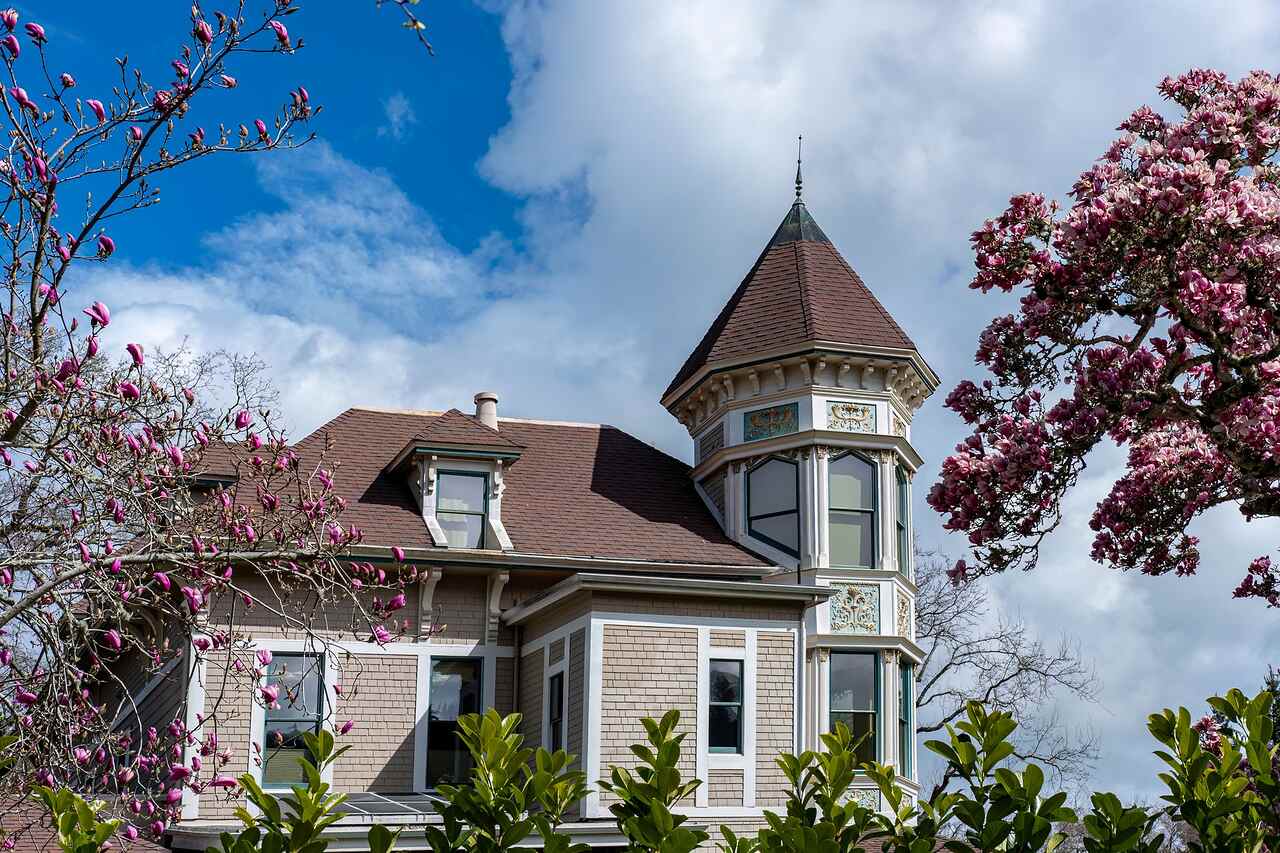
The Victorians here have the most complicated rooflines in the city, and every turret, dormer and porch roof adds another junction where a soffit meets a roof deck. Those junctions are the way in.
- Complex Victorian rooflines
- Restoration-era penetrations
- Trail corridor at the edge
Why a complicated roofline is a rodent problem
Every junction is a potential opening, and an Inman Park Victorian has a great many junctions. Turrets, cross gables, dormers, a wrapping porch roof, bay window roofs and the valleys between them each create a point where a soffit meets a roof deck, and the roof return at that point is the opening local contractors name first.
A simple gabled ranch has four of those corners. A Queen Anne with a turret, three gables and a wrapping porch can have fifteen or twenty, all of them at height, several of them reachable only from an awkward ladder position. That is why an inspection here takes longer and why a sealing quote runs higher than it would for the same square footage in a simpler house.
The junctions that matter most
Six of them account for nearly every roof-level entry on a house like this.
- The roof return at every eave corner, including the porch roof corners
- Where a porch roof ties into the main wall, which is frequently open behind the trim
- Dormer cheeks, where the dormer wall meets the main roof plane
- Turret eaves, which are usually the hardest to reach and the least often inspected
- Valley terminations at the eave line
- Gable vents, of which these houses often have several
The later bungalows in the neighborhood are simpler and behave like the rest of the intown stock, with the openings concentrated at four corners and the foundation.
What a century of restoration has added
Penetrations, and a lot of them. Inman Park was one of the first Atlanta neighborhoods to be restored in earnest, and most houses here have been through several rounds of work over the decades. Each round added something that passes through the building envelope.
Kitchens and bathrooms have been moved, so there are floor penetrations for drains and supply lines in places the original plan never had them. HVAC has been retrofitted, often more than once, leaving line set penetrations and condensate drains through exterior walls and sometimes abandoned holes from an earlier system. Electrical services have been upgraded. Basements have been dug out or partly finished.
The ones that keep turning up
Six penetrations show up again and again on houses that have been restored in stages.
- Abandoned penetrations left open when an HVAC system was superseded
- Floor penetrations under relocated kitchen and bathroom fittings, unsealed from below
- Dryer vents through an exterior wall with a finger-wide gap around the duct
- Gaps where a rear addition meets the original structure
- Basement window wells and the openings around older frames
- Chases run between floors during a rewire, connecting a crawl space to an attic
That last one is the reason an Inman Park house can have an attic problem fed from the crawl space. A continuous chase from bottom to top is a highway, and it is invisible from either end.
The trail corridor and the yards
The trail and its green corridor along the neighborhood edge is a landscape feature, and it is worth describing accurately rather than dramatically. A planted corridor provides cover and travel for wildlife of all kinds, and the practical implication for a house backing onto it is about the edge of your own lot rather than the corridor itself.
The things that matter are within a few feet of the building: dense ground cover and ivy against the foundation, wood piles and stored materials along a back fence, mature planting whose limbs reach the roof, compost and fallen fruit, and bins kept against the wall. Those are harborage and food, and they matter whether a lot backs onto a trail, an alley or another garden.
Free actions with real value
Five things cost nothing and change what the inspection has to find a way around.
- Cut limbs back from the roof, which is the single most useful one on a canopied lot
- Pull ivy off the walls and out of the soffit line
- Clear ground cover back from the foundation line to create a visible strip
- Move wood piles and stored materials off the ground and away from the building
- Keep bins lidded and off the wall where the layout allows
Doing all of that before an inspection changes what the quote has to cover, and it costs nothing but an afternoon.
A representative roofline closure in Inman Park
The closure that defines this neighborhood is at a porch roof tie-in. Where a wrapping porch roof meets the main wall of a Victorian, the framing behind the trim frequently leaves a void that opens into the soffit run and from there into the main attic. It is above head height, hidden behind decorative woodwork, and almost never visible from the ground.
The work is to shape galvanized mesh or sheet metal into the void from the eave side, fasten it back to sound framing, and finish it so the original trim and bracket work go back exactly as they were. On a turret eave the same closure has to be made in a curve, which takes longer and is the reason these houses take a second visit more often than a simple gable does. Each closure is photographed before and after, because none of it can be checked from the ground afterward.
Rat holes around a building
What a burrow looks like, and where it leads.
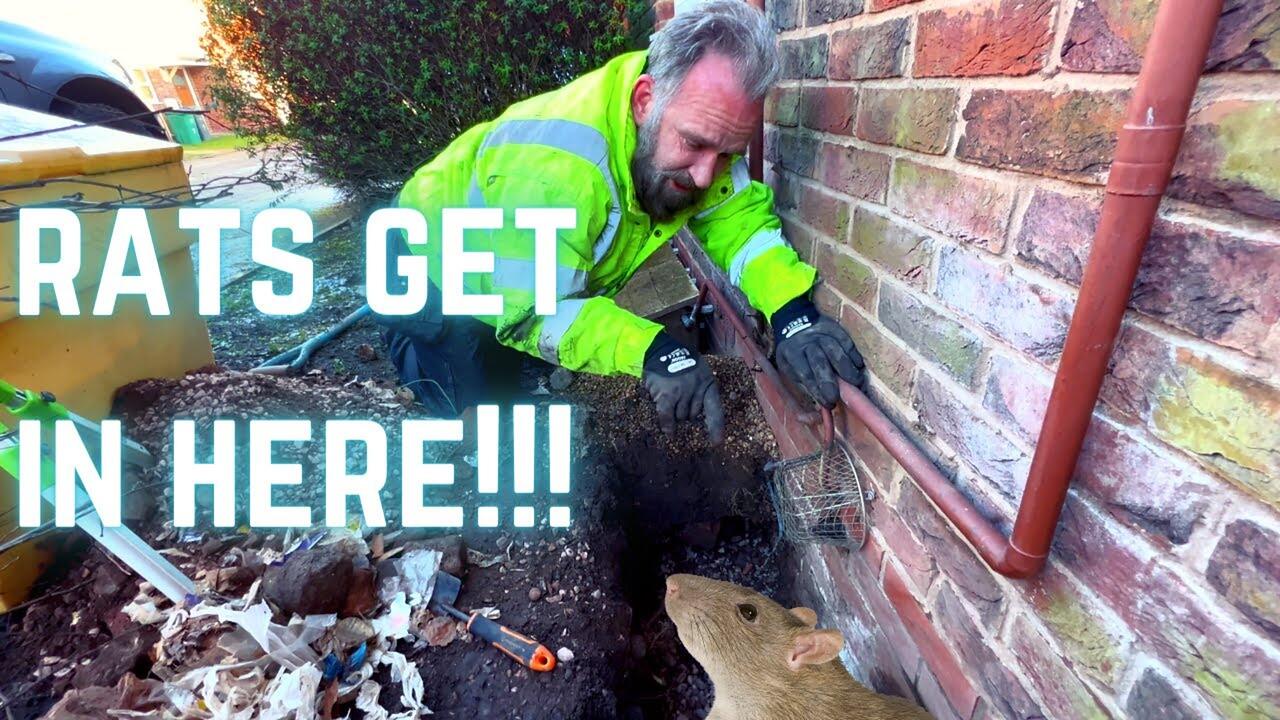
Video: RAT holes around your house? How to stop rats burrowing, from Pest Interceptors.
Why an Inman Park inspection is a long one
Every junction gets counted
A Queen Anne with a turret, cross gables and a wrapping porch can carry twenty roof return junctions where a simple house carries four, and each one is a separate opening at height. The inspection counts and photographs all of them rather than sampling the reachable ones, because a sealing quote built from a sample leaves the openings nobody looked at.
UF/IFAS sets the rat-proofing threshold at a quarter of an inch.
Restoration penetrations get hunted
A century of moved kitchens, retrofitted HVAC and rewiring leaves abandoned penetrations all over a house like this, including chases that run from a crawl space straight to an attic. Those are invisible from either end and they are the reason an attic problem here is sometimes fed from below. Finding them is the difference between a job that ends and one that recurs.
Roof rats range about 150 yards from a den, per UF/IFAS.
Closures are made to disappear
Work on a restored Victorian is done from behind original trim wherever it can be, with metal shaped into the void and the woodwork reinstated as it was. Turret eaves and curved details take longer for that reason. Every closure is photographed before and after, since nothing up there can be verified from the ground once the ladder comes down.
Historic district requirements are set by the city and worth confirming directly.
A common Inman Park call
The situation: A caller in an 1890s Queen Anne hears movement in the ceiling of an upstairs room after dark, and separately has been finding droppings in a basement utility area. Two contractors have quoted for the attic and neither mentioned the basement.
What gets done: The inspection counts sixteen roof return junctions across the main roof, the porch roof and a turret, and finds three of them open, along with a dormer cheek gap. In the basement it finds an abandoned penetration from a superseded HVAC system and a chase running up beside a bathroom stack to the attic, which explains why both problems are the same problem. The quote covers the roofline closures, the basement penetrations, the chase, and one trapping program rather than two.
How it turns out: The chase is closed at both ends first, the roofline openings with no traffic are sealed, and traps go into the attic run. The last roof return is closed after nine quiet nights. The basement stops producing droppings at the same time as the ceiling goes quiet, which is what confirmed the two were connected.
Inman Park questions
Four answers on rooflines, restoration work, the corridor and cost.
Call (404) 924-6653Why is the quote higher than my neighbor's?
Almost always because of the roofline rather than the square footage. A Victorian with a turret, several gables and a wrapping porch carries many more soffit and roof deck junctions than a bungalow of similar size, and each one is a separate closure at height, some of them curved. Ask for the quote to list the junctions individually, since that makes the difference visible rather than mysterious and lets you compare two bids properly.
I have noise upstairs and droppings in the basement. Is that two problems?
Often it is one problem with two symptoms. Houses restored in stages frequently have a chase running from a basement or crawl space up beside a plumbing stack to the attic, left open during a rewire or a bathroom relocation. An animal using that route appears at both ends and nowhere in between, and closing the chase is what resolves it. A contractor quoting only for the attic has not looked for it.
Does backing onto the trail corridor make it worse?
Less than people assume, and the honest answer is that the edge of your own lot matters more than what is beyond the fence. A planted corridor provides cover and travel, but the things that decide whether an animal reaches your building are within a few feet of it: ivy on the walls, ground cover against the foundation, limbs over the roof, wood piles and bins against the wall. Clearing a visible strip along the foundation line is worth more than anything you could do about the corridor.
What does a Victorian job cost in Inman Park?
The trapping sits in Angi's Atlanta band of $442 to $1,138 with an average around $786, and the sealing is where the number moves. HomeGuide's 2026 national guide puts full-home exclusion at $500 to $2,500, and a complex Victorian roofline with a dozen or more junctions tends toward the upper part of that, sometimes above it where turret work is involved. Those are typical-job bands, and the free inspection produces the itemized quote.